
 By
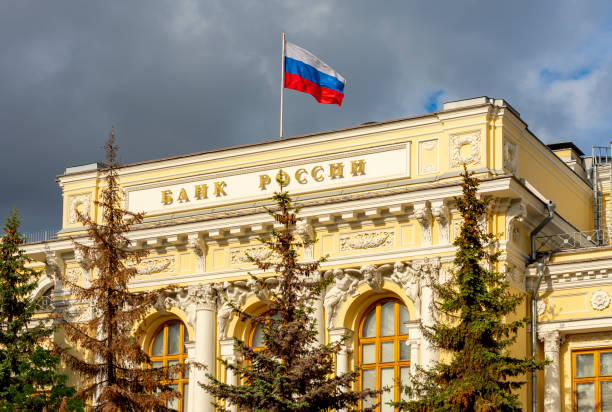
By Russia could have its new regulated cryptocurrency market operating before the end of 2026, according to a senior Bank of Russia official, as authorities move from passing the country’s landmark crypto law to building the infrastructure required for legal domestic trading.
Bank of Russia First Deputy Governor Vladimir Chistyukhin said on September 21 that the industry could begin functioning within a legal framework before year-end, with regulators working to complete a package of 27 implementing acts. The package comprises seven primary regulations and 20 secondary measures. Six of the seven initial measures have already been submitted to Russia’s Justice Ministry, while the central bank intends to adopt the remaining secondary regulations by the end of October. The implementation follows legislation adopted by the State Duma in July that established a formal framework for cryptocurrency circulation in Russia. The law took effect on September 1, 2026, replacing the country’s previously fragmented approach with a regulated market supervised by the Bank of Russia.
Exchanges, Depositories and a Crypto White List
The new system will create regulated intermediaries specifically for digital assets. Crypto exchanges will be authorized to buy and sell cryptocurrencies, while newly created digital depositories will record investors’ ownership rights and provide infrastructure resembling conventional securities custody. The Bank of Russia will maintain official registers of these operators. Digital depositories will require minimum capital ranging from 50 million to 250 million rubles, depending on their activities, including whether they interact with public blockchains or provide post-trade settlement services. Their capital must consist of sufficiently liquid, high-credit-quality assets.
The central bank is also developing a “white list” determining which cryptocurrencies can be publicly offered through organized trading venues. Its rules consider factors including market capitalization and average daily trading volume. The framework will not be restricted entirely to wealthy or professional investors. Ordinary, non-qualified investors will be permitted to purchase the most liquid approved cryptocurrencies after passing a knowledge test, subject to an annual ceiling of 300,000 rubles through each intermediary. Qualified investors must also pass testing but can trade cryptocurrencies without the same monetary limit.
Banks Face a 1% Crypto Risk Limit
Russia is simultaneously imposing tight restrictions on how deeply its traditional financial system can become exposed to crypto. On September 18, the Bank of Russia proposed new prudential ratios limiting a bank’s aggregate exposure to cryptocurrencies and foreign digital instruments to 1%. The calculation will include both direct crypto holdings and derivatives whose payouts depend on cryptocurrency prices. Banks are expected to begin reporting their crypto turnover and the new risk ratios from January 2027.
The controlled opening represents a significant shift from the Bank of Russia’s historically restrictive approach toward cryptocurrencies. It creates a legal pathway for domestic investment while keeping trading, custody and institutional exposure inside a closely supervised perimeter. The change does not, however, turn cryptocurrency into ordinary money in Russia. Crypto remains prohibited as a means of payment for goods and services domestically. The framework instead treats it primarily as an investment asset while maintaining separate rules governing its use in international settlements. Market participants also face a longer transition period. Existing businesses must ultimately comply with the new licensing regime, with exchanges, brokers, custodians and other providers expected to obtain the necessary approvals by July 1, 2027. The immediate objective is earlier: finish the regulatory architecture over the coming weeks and allow Russia’s first fully regulated crypto market to begin operating before 2026 ends.