
 By
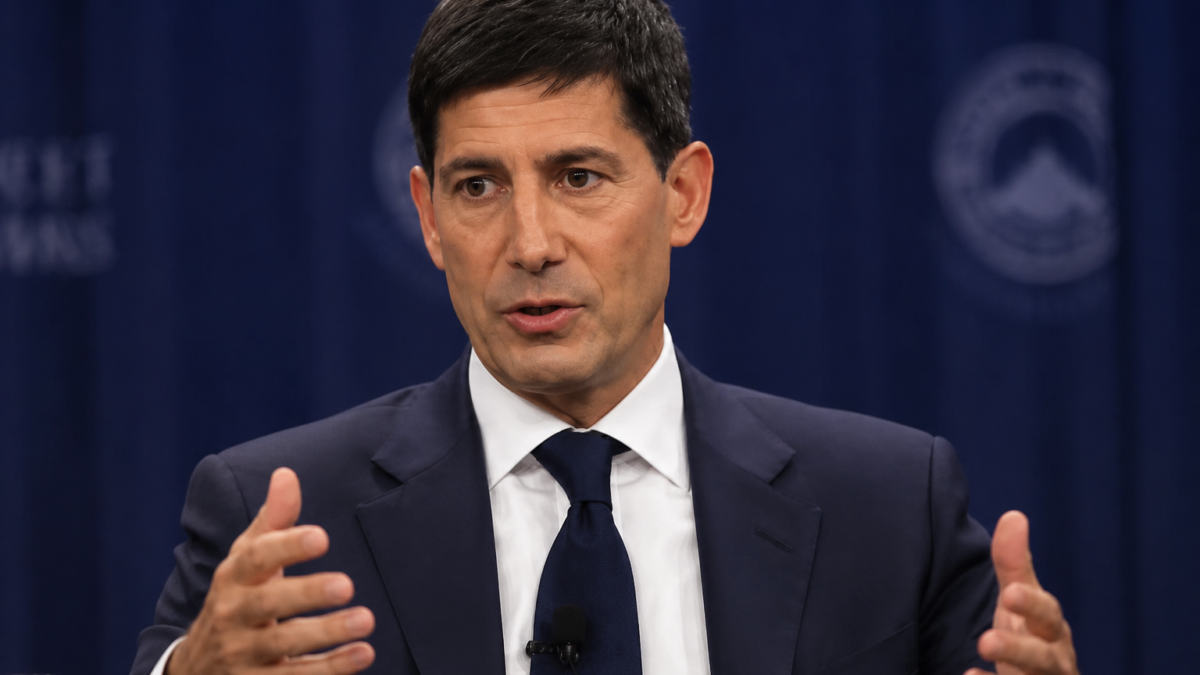
By Federal Reserve Chair Kevin Warsh struck an optimistic but guarded tone on artificial intelligence on Friday, calling it potentially the most consequential economic change of his lifetime while warning that the transition will not be smooth.
“I want you to hear from me optimism, but optimism leavened by the seriousness of purpose,” Warsh said at the IMF-World Bank Annual Meetings in Bangkok.
Warsh sees AI driving a more productive economy over time, but the path could be uneven and disruptive, a message that lands as markets question whether today’s enormous spending on AI infrastructure will ultimately generate adequate returns.
He also declined to prejudge the Federal Reserve’s October 27-28 policy meeting.
AI transformation does not guarantee AI returns
Warsh’s argument is not a conventional warning about artificial intelligence. He sees AI as a powerful productivity shock capable of reshaping output, employment and the global economy.
Interactive Brokers chief market analyst Steve Sosnick told Reuters that investors are now questioning “the speed, the efficacy and the profitability of the rapid build-out in AI”.
Sosnick said a slower pace of data-centre construction would eventually mean less spending on hardware because customers would no longer race to buy equipment at almost any price.
That distinction is crucial, as technologies can transform economies while still producing poor investments during the build-out.
Railways, telecoms and the internet created enormous economic value, but investors also lost money when capital flooded into projects whose returns failed to justify their costs.
CoreWeave shows financing is becoming the bottleneck
CoreWeave has become the clearest example of that tension.
The Nvidia-backed cloud provider has around $50 billion of debt, while yields on some of its unsecured bonds have surged into distressed territory. One bond due in 2031 traded above a 16% yield this week.
Demand has not disappeared. CoreWeave continues to point to a large contract backlog and strong demand for GPU computing.
When borrowing costs rise sharply, every new data centre needs to generate a higher return before the project makes economic sense. That can slow expansion even while customers still want more computing power.
Saxo chief investment strategist Charu Chanana said markets are becoming more demanding about profitability, financing and capital discipline as investors separate profitable AI suppliers from heavily indebted infrastructure companies.
That is the risk beneath Warsh’s optimistic long-term view. AI adoption can continue accelerating while weaker projects are forced to stop because capital becomes too expensive.
AI investors now want cash flow, not just adoption
Investors spent much of the AI boom rewarding companies for user growth, product launches and rising usage.
They are increasingly demanding evidence that those products can generate enough cash to support the infrastructure behind them.
Meta’s Muse illustrates the challenge. The product has attracted millions of users, offering evidence that agentic AI can achieve genuine consumer adoption.
IDX Advisors chief investment officer Ben McMillan told Business Insider that Meta’s existing audience gives it time to monetise Muse, “but only so much”, particularly as higher bond yields offer investors an increasingly attractive alternative.
That comparison becomes more important when the risk-free rate is high. AI projects must now generate returns that compensate investors for both execution risk and the opportunity cost of capital.
Warsh’s message therefore strengthens the long-term AI bull case while making the investment case more demanding.
The post Kevin Warsh says AI will change the world, but investors may hate what comes next appeared first on Invezz