
 By
US inflation accelerated further away from the Federal Reserve’s 2% target in October, while stronger-than-expected economic growth reinforced expectations of another interest rate increase in December.
President Donald Trump proposed fresh tariffs on 14 trading partners, adding to global trade tensions, while crude oil prices climbed on renewed geopolitical concerns after Yemen’s Houthis claimed an attack on Saudi Arabia’s largest oil refinery.
Gold prices, meanwhile, tumbled to their lowest level in over a year as persistent inflation strengthened expectations of higher US interest rates.
PCE inflation and GDP growth strengthen Fed rate hike expectations
The US personal consumption expenditures (PCE) price index, the Federal Reserve’s preferred inflation gauge, rose at an annual rate of 3.8% in October, matching economists’ expectations, according to data released by the Commerce Department on Wednesday.
Core PCE inflation, which excludes volatile food and energy prices, increased 3.3%, exceeding forecasts by 0.1 percentage point.
The figures suggest that inflationary pressures remain persistent despite the Fed’s efforts to bring price growth towards its 2% target.
Meanwhile, a separate Commerce Department report showed that the US economy expanded at an annualised rate of 4.3% in the third quarter, 0.9 percentage points above the initial estimate.
The stronger GDP reading reflected upward revisions to investment and consumer spending.
Personal income also increased 0.7% in October, exceeding the 0.4% estimate, while consumer spending rose 0.3%.
Markets were pricing in a 97.8% probability of a 25-basis-point rate increase at the Fed’s December 8-9 meeting.
Economists also warned that persistent inflation and resilient economic activity could leave the central bank considering further increases in 2027.
Trump proposes fresh tariffs on 14 trading partners
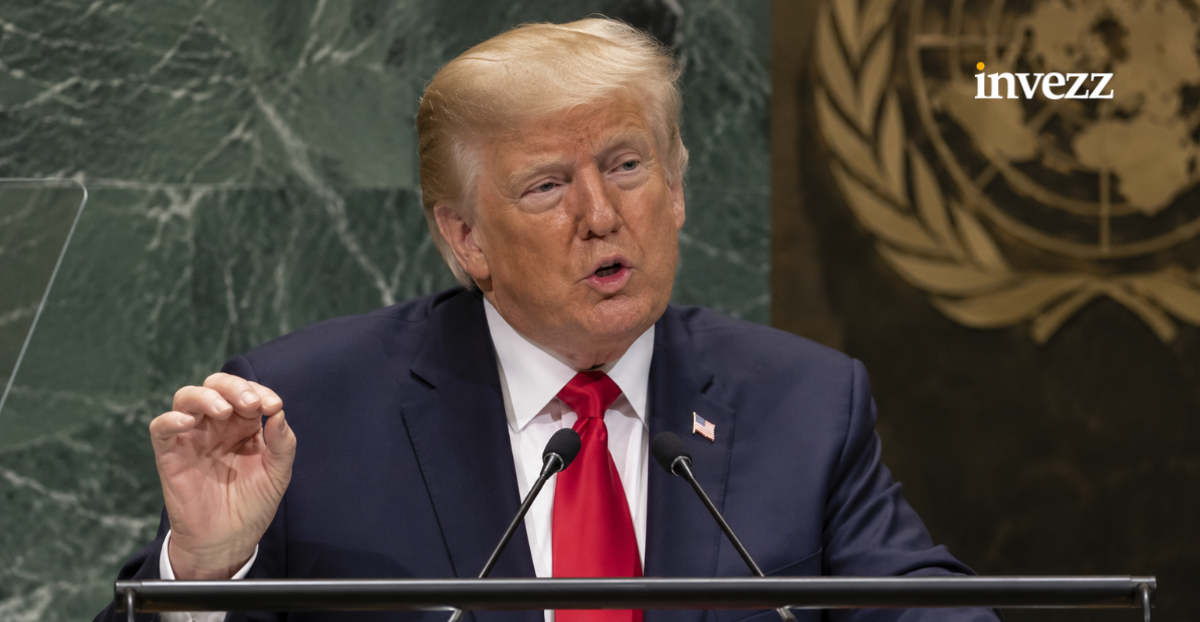
US President Donald Trump’s administration proposed new tariffs on 14 trading partners, targeting what Washington describes as structural excess industrial capacity.
The proposed duties follow an eight-month investigation conducted under Section 301 of the Trade Act of 1974.
China faces the steepest proposed burden, with a 20% additional tariff on most imports, potentially bringing combined duties on affected goods to around 45%.
India faces proposed tariffs of up to 25%, which could fall to 17% if the two countries reach a trade agreement.
Vietnam faces rates of up to 35%, potentially declining to 20% under a deal.
The European Union, Japan, South Korea, Switzerland and Taiwan face a combined tariff ceiling of 15%, excluding standard most-favoured-nation duties.
The 14 economies accounted for approximately $2.07 trillion in US goods imports in 2025, representing 60.5% of total imports.
The proposals will not take effect immediately.
Interested parties have until January 5, 2027, to submit comments, with public hearings scheduled to begin on January 25.
The announcement added to market concerns over global trade tensions, with major Asian equity indexes declining sharply on Wednesday.
Oil prices rise after Houthi attack claims
Crude oil prices climbed more than 1% on Wednesday after Yemen’s Iran-aligned Houthis claimed responsibility for an attack on Saudi Arabia’s Ras Tanura oil refinery and Riyadh’s financial district.
Brent crude futures rose 2.90%, to $94.14 a barrel, while US West Texas Intermediate crude gained 1.96%, to $83.66.
Both benchmarks had already advanced more than 2% on Tuesday.
The attack claims raised concerns about potential disruptions to Middle Eastern oil supplies, adding a geopolitical risk premium to prices.
However, expectations of a global supply surplus continued to limit gains.
US crude inventories increased by 1.1 million barrels to 418.9 million barrels in the week ended November 20, according to the Energy Information Administration.
Investors are also watching the November 29 OPEC+ meeting, where ministers will discuss production policies for 2027.
Gold price falls on rate concerns
Gold prices dropped more than 3% on Wednesday, falling below the $3,500-an-ounce threshold as stronger US inflation reinforced expectations of higher interest rates. The precious metal pared some of the losses at the time of writing.
Spot gold was down 0.09% to $3,550.52 an ounce. US gold futures for December delivery fell 0.42% to $3,545.82.
Persistent inflation has strengthened expectations that the Federal Reserve will raise borrowing costs again in December.
Higher interest rates typically weigh on gold because the non-yielding asset becomes less attractive compared with interest-bearing investments.
Gold has now fallen approximately 37% from its record high earlier this year.
Other precious metals also declined sharply.
Spot silver dropped 0.47% to $40.64 an ounce. Platinum fell 0.41% to $1,252.70, while palladium declined 1.77% to $845, having earlier touched its lowest level since 2017.
The latest declines came alongside a broader selloff in US equities, with the Nasdaq falling 4% amid continued pressure on AI-linked stocks and concerns over the potential returns from heavy artificial intelligence investments.
AI disclosure: AI tools assisted with research and drafting of this piece. An Invezz editor reviewed the facts, sources and wording before publication. Any opinions or analysis are Invezz’s, not those of an automated system.
The post Evening digest: US inflation rises, Trump proposes fresh tariffs on 14 economies appeared first on Invezz