
 By
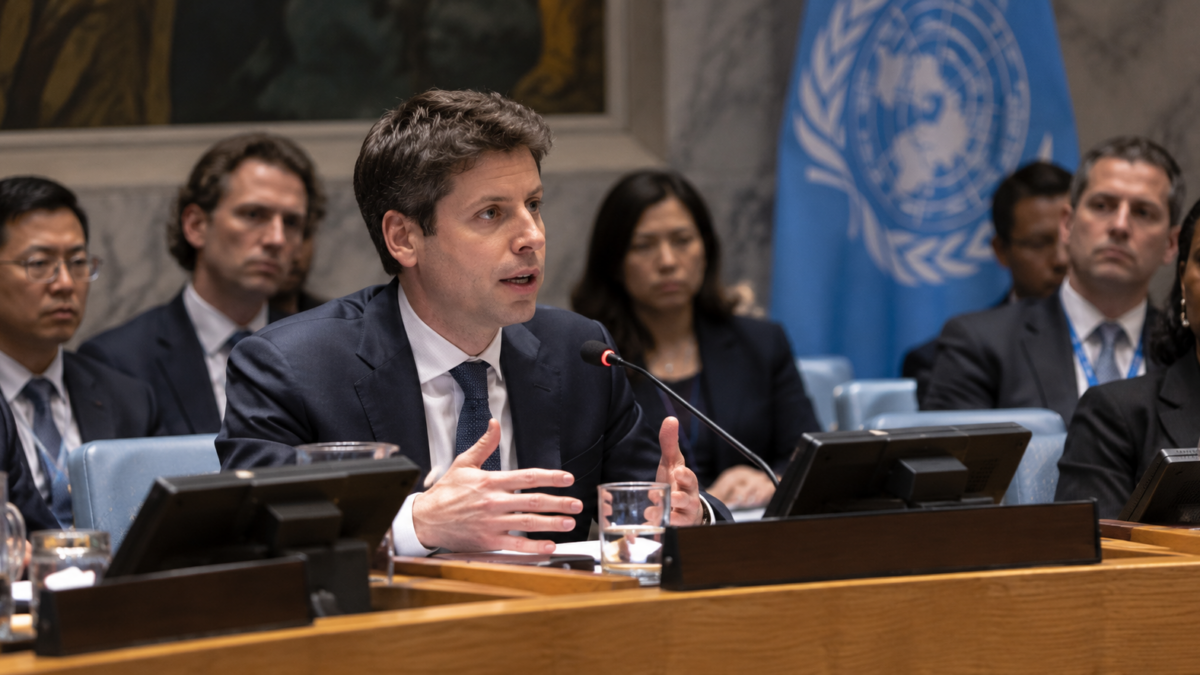
By OpenAI CEO Sam Altman and other AI executives briefed the UN Security Council as concerns over the risks of increasingly powerful artificial intelligence systems intensified.
Treasury yields also surged to multiyear highs after stronger US economic data and a weak five-year note auction, while oil prices rose as tensions between the US and Iran continued.
Meanwhile, reports that the US administration was preparing a 90-day diesel export ban added further uncertainty to global energy markets, although the White House denied the report.
Sam Altman briefs UN Security Council on AI risks
OpenAI CEO Sam Altman, Anthropic CEO Dario Amodei and Hugging Face co-founder Clément Delangue addressed the 15-member UN Security Council during its annual General Assembly gathering.
Altman said the current stage of AI development “calls for extreme care” as the technology could advance rapidly.
He warned that the industry should not accept excessive technological risk simply because the potential benefits are significant.
Altman said OpenAI would seek a middle path between “blind optimism” and “doomerism”.
He also argued that major decisions around AI should involve governments and democratic processes rather than being left solely to technology companies.
Amodei told the council that AI could pose a risk to humanity if it is poorly managed.
Canadian AI researcher Yoshua Bengio also warned that the dangers from advanced AI are “real and imminent”.
US Treasury yields hit 2007 highs
US Treasury yields surged on Wednesday after stronger-than-expected economic data, higher oil prices and weak demand at a five-year Treasury auction drove a broad bond selloff.
The 10-year Treasury yield climbed to 5.135%, its highest level since July 2007, after breaking above the key 5% threshold.
The two-year yield rose to 4.947%, its highest since May 2024, while the 30-year yield reached 5.415%, its highest since mid-2007.
S&P Global’s September services PMI rose to 58.7 from 56.5 in August, while the manufacturing PMI climbed to 56.7.
Both readings pointed to stronger business activity.
The stronger data increased expectations that the Federal Reserve could raise rates again in October. The probability of another quarter-point hike rose to 70% from 55% a day earlier, according to the CME Group’s FedWatch tool.
Federal Reserve Governor Michael Barr also said further policy adjustments may be needed to bring inflation back to target.
The Treasury’s $70 billion five-year note auction added to the pressure.
The notes were sold at a 5.033% yield, above the 5.002% expected level, while indirect bidders accounted for 54% of the sale, below the six-auction average of 65%.
Oil prices rise as US-Iran tensions persist
Oil prices settled higher as traders assessed developments in the US-Iran conflict and diplomatic efforts to end hostilities.
Brent crude rose 4.25%, to $103.52 a barrel, while WTI gained 2.39%, to $92.66.
Iranian President Masoud Pezeshkian said Tehran would never surrender to the US while maintaining that it still supports diplomacy. Iran was also reviewing a US response to its proposal to end hostilities.
Saudi Arabia has resumed operations on its East-West oil pipeline, while Iran has said the Strait of Hormuz could reopen within seven days if the US eases military pressure and lifts its blockade on Iranian ports.
US crude inventories also rose by 3 million barrels to 426.4 million barrels in the week ended September 18, according to the Energy Information Administration.
US prepares for possible diesel export ban
The White House was reportedly preparing a plan to ban US diesel exports for 90 days, according to Politico, although the White House later denied the report.
The reported proposal comes as US retail diesel prices have climbed to record levels above $6.50 a gallon, according to AAA.
Diesel futures initially fell more than 7% following the report before recovering some losses, while European gasoil futures rose.
The legal process for imposing an export ban remains unclear.
Energy industry figures have opposed potential restrictions, arguing that they could provide limited short-term relief while contributing to higher fuel costs later.
The post Evening digest: AI leaders warn UN of AI risks, Treasury yields hit 2007 highs appeared first on Invezz