
 By
By Taurus has completed support for the full Hedera technology stack, allowing banks and regulated financial institutions to custody digital assets, issue tokenized securities and deploy smart contract applications through a single infrastructure provider. The announcement is less about adding another blockchain network and more about addressing a growing challenge facing institutional digital asset adoption: banks increasingly want infrastructure that supports their future tokenization strategy without forcing them to replace technology providers as their ambitions expand.
The Switzerland-based digital asset infrastructure provider said the final phase of the integration enables institutions to use every major capability available on the Hedera network through Taurus’ existing platform suite. Banks can now custody and stake HBAR, issue native Hedera tokens, create tokenized bonds, funds and stablecoins, and deploy smart contracts using Hedera’s Ethereum Virtual Machine-compatible Smart Contract Service.
For financial institutions, the significance lies in what happens after digital asset custody. Many banks initially entered the sector by offering secure custody for cryptocurrencies, but increasingly see tokenized deposits, money market funds, bonds and other real-world assets as the larger commercial opportunity. Infrastructure that supports only custody often becomes obsolete once tokenization projects move into production.
The Problem Banks Are Trying to Avoid
Digital asset infrastructure has evolved rapidly over the past several years, but many institutional deployments remain fragmented.
A bank may select one provider for custody, another for token issuance, a third for smart contracts and separate infrastructure for staking or blockchain connectivity. Every additional provider introduces another procurement process, legal review, security assessment, technical integration and operational risk.
As tokenization projects move from proof-of-concept into commercial deployment, those additional integrations become increasingly expensive.
Taurus argues that supporting the complete Hedera technology stack removes much of that complexity. Rather than purchasing new infrastructure each time a digital asset strategy evolves, institutions can enable additional functionality within the same regulated platform already approved by compliance, risk and technology teams.
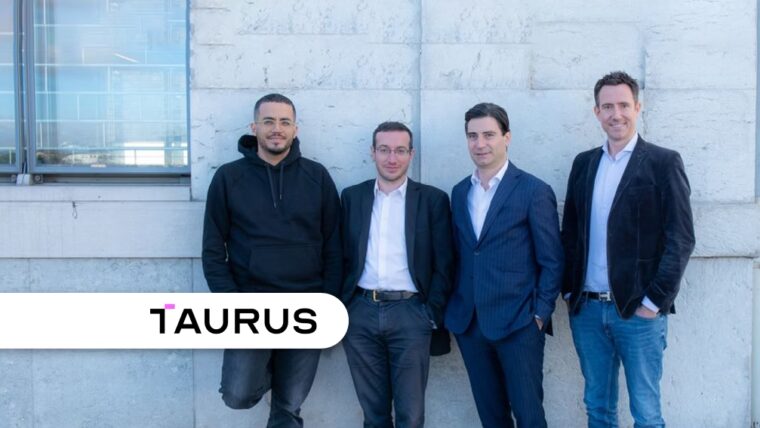
Lamine Brahimi, Co-Founder and Managing Partner of Taurus, said banks increasingly expect infrastructure capable of supporting multiple digital asset use cases rather than isolated products.
“Financial institutions need infrastructure that can cover more than one digital asset use case. They want a single platform for the full spectrum of their strategy. By supporting the complete Hedera technology stack, Taurus enables institutions to leverage native tokenization, smart contracts, and custody capabilities within the same regulated infrastructure they already trust.”
From Custody to Tokenized Capital Markets
The integration extends across Taurus-PROTECT, Taurus-EXPLORER and Taurus-CAPITAL, covering custody, staking, blockchain node infrastructure, token issuance through the Hedera Token Service and programmable financial products using Hedera’s Smart Contract Service.
The final addition—smart contract support—is arguably the most important.
Hedera’s EVM-compatible environment allows developers to build applications using Solidity and existing Ethereum development tools while benefiting from Hedera’s underlying consensus architecture. That compatibility lowers technical barriers for banks and fintech companies already investing in Ethereum-based development while allowing applications to run on a network designed for enterprise use.
The expansion also benefits third-party software providers building tokenization engines, stablecoin platforms and fund administration systems. Those firms can now deploy products on Hedera while relying on Taurus to provide institutional custody and regulated infrastructure.
Why Hedera Is Competing for Institutional Tokenization
Hedera occupies a different position from many public blockchain networks competing for financial institutions.
Rather than relying solely on decentralized governance, the network is operated by a governing council consisting of multinational corporations including Google, IBM, Deutsche Telekom, Standard Bank, Accenture and FedEx. That governance model has become one of Hedera’s primary selling points when competing for enterprise and regulated financial market infrastructure.
The network has processed more than 70 billion transactions and has increasingly positioned itself around tokenization, payments and enterprise applications rather than retail cryptocurrency activity.
As more financial institutions evaluate blockchain infrastructure for issuing tokenized securities and stablecoins, governance, regulatory familiarity and operational resilience are becoming almost as important as transaction speed and network fees.
Infrastructure Is Becoming the Competitive Battleground
The announcement also reflects a broader shift taking place across institutional digital assets.
Only a few years ago, infrastructure providers primarily competed on cryptocurrency custody. Today, banks increasingly evaluate platforms according to whether they can support the entire lifecycle of tokenized finance, from custody and settlement to issuance, collateral management and programmable financial products.
That shift has accelerated alongside regulatory developments. Europe’s Markets in Crypto-Assets Regulation is now in force, while legislative progress in the United States has provided greater clarity around digital asset market structure and stablecoins. As regulatory uncertainty gradually recedes, technology procurement rather than legal uncertainty is becoming the primary constraint on institutional adoption.
Kamal Youssefi, President of The Hashgraph Association, said regulatory progress is creating an environment in which highly regulated financial institutions can move into blockchain-based finance with greater confidence.
“With the MiCA regulatory framework taking effect in Europe, alongside the progress in the USA with the CLARITY Act, institutional investors and highly regulated financial institutions can now enter the Web3 space with ease and confidence, thanks to the full integration of the Hedera technology stack into Taurus’s crypto infrastructure solutions.”
The Race Is Moving Beyond Custody
Taurus already provides digital asset infrastructure to more than 40 banks and regulated financial institutions, including Deutsche Bank, CACEIS and State Street. Completing full Hedera support strengthens its position as infrastructure providers increasingly compete not on the number of blockchain networks they support, but on how completely they support them.
For banks considering tokenization strategies, the ability to expand from cryptocurrency custody into stablecoins, tokenized funds or programmable securities without launching another procurement project may prove more valuable than adding another blockchain integration alone.
That is ultimately what this announcement represents. Institutional blockchain adoption is moving beyond proving that tokenization works. The next stage is making it operationally simple enough that banks can treat new digital asset products as configuration choices rather than entirely new technology programs.