
 By
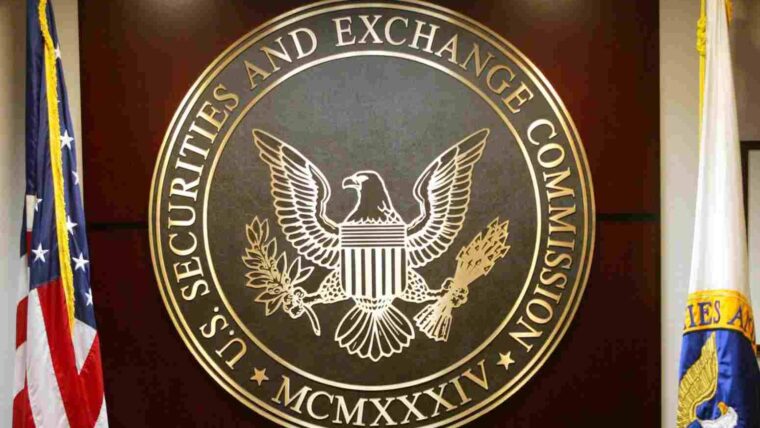
By An SEC document that circulated over the weekend as proof that regulators had formally classified XRP, Solana, Bitcoin and Ether as commodities does not do that. The order, Release No. 34-106268, dated September 3, approves a change to the listing standards of a single exchange, Nasdaq Texas, and the four cryptocurrencies appear inside a worked arithmetic example showing how a new 15% holdings buffer is calculated. This is a rulemaking-and-comment notice, not breaking news and not a federal classification, and the gap between what it says and how it was reported is the reason it is worth explaining.
The document approves, on an accelerated basis, a proposal Nasdaq Texas filed on August 20 to amend its Rule 5711(d), the generic listing standards for commodity-based trust shares. The change lets these products hold a small share of assets that would not otherwise qualify, adds a definition for “digital commodity,” and permits actively managed strategies. It is materially identical to changes the SEC already approved for Nasdaq, NYSE Arca and Cboe in July, so it extends an existing framework rather than breaking new ground.
Where the Four Coins Actually Appear
The order describes a hypothetical trust that holds “$95 million in market value of Bitcoin, Ether, Solana, and XRP, which all presently qualify as eligible commodities under Rule 5711(d)(iv)(A)(2) and (3).” The phrase “eligible commodities” is doing narrow, technical work. It means only that each coin meets that exchange’s listing test, which the order spells out: the asset “underlies a futures contract that has been trading on an ISG market for at least 6 months, and has an ETF” providing at least 40% economic exposure.
That is a market-surveillance standard, designed so the exchange can obtain trading information and monitor the shares for fraud and manipulation. It says nothing about how the four assets are classified under federal law, which is a separate question the order never addresses, and one that sits at the center of the wider fight over XRP’s regulatory status. The headlines that turned an exchange eligibility criterion into a federal commodity ruling read a worked example as a legal determination.
Investor Takeaway
Eligible commodities” here means the four coins meet one Texas exchange’s listing test, a futures-plus-ETF surveillance standard, so the order confirms nothing about their status under federal securities law and should not be read as reclassifying XRP or Solana.
The 15% Buffer and Why It Is Provisional
Under the amended rule, at least 85% of a trust’s net asset value must consist of eligible commodities, qualifying securities, or cash and cash equivalents, while up to 15% may be assets that do not meet the criteria, a slice the order limits to “digital commodities” and non-qualifying securities. Non-fungible assets and collectibles are excluded, and the sponsor must check compliance daily and notify the exchange promptly on any breach. That structure is what makes the standard matter to issuers racing to launch multi-asset crypto funds, the same competitive push visible in Canary Capital’s recent XRP ETF filing.
The definition of “digital commodity” is where this connects to the bigger regulatory question. The order states the definition is “informed by the joint interpretative guidance issued by the SEC and the CFTC, effective March 23, 2026,” and that the exchange “will submit a rule filing to conform the definition” to any statutory definition later enacted. That points directly at the CLARITY Act cloture vote scheduled for September 15, which would create the federal market-structure definition this exchange rule is standing in for. Until that happens, the classification here is provisional and exchange-level.
The SEC Comment Window
Because the SEC granted approval and opened comment at the same time, the order is live for public input. The exact deadline, though, is not yet set: the order carries a bracketed placeholder reading “21 days after date of publication in the Federal Register,” and that notice has not published yet. So the comment window runs for 21 days after Federal Register publication, a date that does not exist until the notice appears, and any specific calendar date circulating now is invented.
None of this changes the assets themselves, which trade on their own dynamics rather than on a listing rule, with XRP around $1.40 and Solana near $105 as of this publication, according to TradingView. The demand backdrop that actually moves them shows up in the running crypto ETF flow data, not in an exchange’s buffer arithmetic. The order changes how certain funds may be listed; it does not change what the coins are or how they are regulated.
Investor Takeaway
The order is an exchange listing-standard change with a 15% buffer, not a federal classification of XRP or Solana, so the real catalyst for any statutory commodity definition remains the September 15 CLARITY Act vote, not this document.