
 By
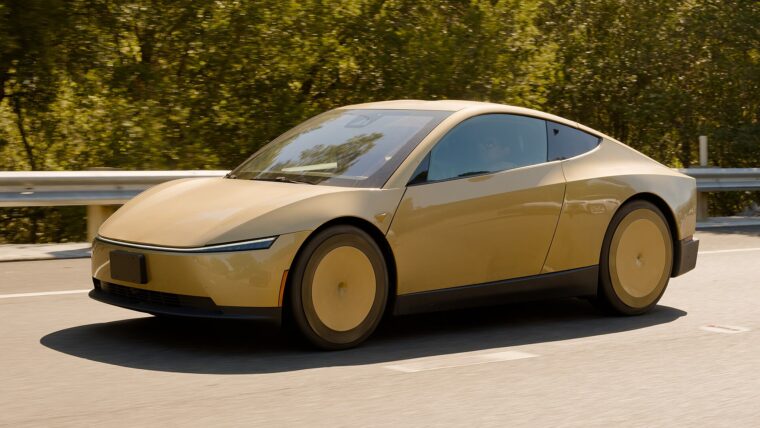
By Tesla Cybercab coverage since 3 September has been filed under headline risk, and that is the wrong drawer. When the National Highway Traffic Safety Administration opened Audit Query AQ26002 on the same day Tesla began charging fares in Austin, the agency was not asking whether a robotaxi had crashed. It was asking how a two-seat vehicle with no steering wheel, no pedals and no mirrors came to be certified against safety standards written for cars with all three. Seven days later the question stopped being a letter. On 10 September NHTSA’s Chief Counsel issued a Special Order compelling Tesla to answer 21 requests under oath by 30 September 2026. The estimated population in scope is 1,000 vehicles. Tesla closed at $364.27 on 18 September, up 2.03% from its 2 September close.
Here is the part almost nobody has priced. Self-certification is not a procedural detail in the Cybercab story; it is the load-bearing beam under the unit economics. Because Tesla self-certified rather than applying for a Part 555 temporary exemption, it deployed with no statutory cap on volume. Its rival Zoox took the other road and is capped at 2,500 exempted vehicles into commerce per 12-month period. That asymmetry is worth billions in theoretical fleet scale, and it rests entirely on a legal contention that certain Federal Motor Vehicle Safety Standards simply do not apply to a car with no driver. A Special Order is not a fishing letter. It is the instrument that precedes a non-compliance finding, and the remedy for non-compliance in a vehicle that physically cannot be brought into conformity is not a software patch. There is no wheel to add.
Key facts
NHTSA opened Audit Query AQ26002 on 3 September 2026, prompted by public information, covering an estimated population of 1,000 Tesla Cybercab vehicles — NHTSA Office of Defects Investigation opening resume, AQ26002, 3 September 2026.
The Special Order is dated 10 September 2026 and signed by Peter Simshauser, Chief Counsel; Tesla’s response is due to the Office of the Chief Counsel by 30 September 2026 and must be accompanied by an affidavit from a responsible officer — NHTSA Special Order directed to Tesla, Inc., 10 September 2026.
Failure to respond fully or truthfully exposes Tesla to civil penalties of up to $27,874 per day, to a maximum of $139,356,994 for a related series of daily violations — Special Order, citing 49 U.S.C. §§ 30163(a)(1), 30165(a)(3) and 49 CFR § 578.6(a)(3), 10 September 2026.
NHTSA granted Zoox Temporary Exemption No. 2026-01 on 28 July 2026, effective to 31 July 2028, covering portions of eight FMVSS and capped at 2,500 exempted vehicles introduced into interstate commerce in any 12-month period — Federal Register, 31 July 2026.
The rule that would accommodate driverless designs in the braking standard is still only proposed: NHTSA’s modernisation of FMVSS No. 135 was published as a notice of proposed rulemaking on 26 June 2026 under Docket NHTSA-2026-0728, comments closed on 27 July and no final rule has issued — Federal Register, 26 June 2026.
TSLA last traded at $364.27, the regular-session close on 18 September 2026 at 4:00 PM EDT, against a 52-week range of $297.38 to $498.83 — stockanalysis.com, as of 18 September 2026.
Tesla’s most recent quarterly report, filed 23 July 2026 for the period ended 30 June 2026, contains zero mentions of NHTSA or FMVSS and refers risk factors back to the 2025 annual report — Tesla Form 10-Q, 23 July 2026.
What NHTSA actually asked, and why the label matters
An audit query sits in a different family from a preliminary evaluation or an engineering analysis. Those are defect investigations, and they start from a pattern of complaints, fires or crashes. AQ26002 starts from none of that. The opening resume lists the prompt as “Public Information” and the problem as an “Examination of the process and technical data on which Tesla relied when certifying the Cybercab.” The agency was reacting to a certification label, not to anything that went wrong on an Austin street.
The resume is unusually explicit about the theory of the case. NHTSA wrote that it “will consider the extent to which Tesla’s certification depended on determinations that certain FMVSS are inapplicable to the Cybercab.” That clause is the entire dispute. On NHTSA’s reading, Tesla did not argue that its brakes perform as well as a pedal-actuated system; it argued that the pedal requirement does not reach a car with no driver.
The Special Order turns that theory into 21 numbered demands. Request 10 asks Tesla to list every standard it “contends does not apply to the subject vehicles” and to “describe fully the entire basis of each of your contentions of inapplicability.” Requests 11 through 18 then walk the standards one by one: telltales under FMVSS No. 101, shift display under No. 102, self-cancelling turn signals under No. 108, mirrors under No. 111, stability control telltales under No. 126.
Request 19 is the one that should have moved the stock. NHTSA states its own position inside the question, writing that “a manufacturer of a vehicle without a service brake activated by means of a foot control could not certify to FMVSS No. 135 (49 CFR § 571.135) S5.3.1,” and then asks Tesla to explain “how Tesla determined that the subject vehicles comply with the requirement in the first sentence of FMVSS No. 135 S5.3.1.” A regulator does not usually telegraph a conclusion inside an information request. Request 7 is nearly as pointed, asking how removing temporarily installed human driver controls “comports with the Safety Act’s make inoperative prohibition in 49 U.S.C. § 30122(b).”
The instrument carries teeth the audit query did not. Issued under 49 U.S.C. § 30166(g)(1)(A), it requires a response “signed under oath, i.e., accompanied by an affidavit signed by a responsible Tesla officer,” and warns that withholding information “may also lead to criminal penalties of a fine or imprisonment of up to 15 years, or both.” It went to Brian Jazaeri, Senior Director and Head of Litigation, and Eric Williams, Associate General Counsel for Regulatory affairs at Tesla.
Jonathan Morrison, Administrator at NHTSA, framed the opening on 3 September: “NHTSA fully supports the safe development and deployment of automated vehicles. But as the federal regulator, we need to ensure that all of our laws are followed.” He added that the agency’s “approach of balancing innovation with safety oversight will allow the United States to maintain its global leadership in AV innovation.” The same announcement contains the sentence that anchors everything else. It notes eight rulemakings under way on standards including brake pedals, wipers, lighting and mirrors, and that “until that work is completed, however, existing standards remain in force.”
The exemption route Tesla did not take
Five weeks before the Cybercab started charging fares, NHTSA published its decision on a near-identical engineering problem. Zoox had applied for a temporary exemption for a purpose-built robotaxi without manual controls. On 28 July 2026 the agency granted it, and Jonathan Morrison, Administrator at NHTSA, signed a notice stating that “Zoox is permitted to manufacture vehicles pursuant to this exemption for two years, provided that not more than 2,500 exempted vehicles are introduced into interstate commerce for commercial deployment in any 12-month period.”
Read the list of standards Zoox needed relief from and the shape of the Tesla problem becomes obvious. The grant covers portions of FMVSS No. 103, No. 104, No. 108, No. 111, No. 135, No. 201, No. 205 and No. 208. On the brake standard the notice is blunt: “Section 5.3.1 of FMVSS No. 135 requires the service brakes to be activated by means of a foot control.” Zoox asked to be excused from that sentence. Tesla appears to have concluded it does not apply.
Request 21 forces the comparison into the open. It cites NHTSA’s own 2022 occupant-protection final rule, at 87 Fed. Reg. 18560, 18567 n.29, for the view that further FMVSS changes would likely be needed before an ADS-only vehicle could be manufactured for sale “absent an exemption to the FMVSS under 49 CFR Part 555,” then asks Tesla to explain “how the subject vehicles comply without any exemption.”
Dimension
Tesla Cybercab
Zoox robotaxi
Route to market
Self-certification under 49 U.S.C. § 30115
Temporary exemption No. 2026-01 under 49 U.S.C. § 30113(b)(3)(B)(iv)
Volume ceiling
None stated
2,500 vehicles into commerce per 12-month period
Term
Open-ended
31 July 2026 to 31 July 2028
FMVSS 135 S5.3.1 (foot control)
Certified as compliant; basis under NHTSA review
Expressly exempted
Ongoing federal oversight
Audit Query AQ26002; sworn response due 30 September 2026
Operational Authorizations, annual VIN reporting, published operating-area maps
Vehicles in scope
1,000 estimated
Up to 2,500 per year
The trade is now legible. Self-certification bought Tesla an uncapped ramp against a Gigafactory Texas line the company states has installed annual Cybercab capacity above 125,000 units. The exemption route would have bought certainty at 2% of that rate. Having tracked the programme since its October 2024 unveiling, what strikes me is how little commentary treats the route as a choice at all.
What the market did with it
TSLA closing price over 12 months to 18 September 2026, audit query and Special Order dates marked. Sources: stockanalysis.com (closes as of 18 September 2026, 4:00 PM EDT); NHTSA AQ26002 documents.
TSLA rose 5.42% on 3 September to close at $376.37, the day paid Cybercab rides began and the day the audit query opened. It gave the move back the next session, falling 5.92% to $354.08. On 10 September, the date printed on the Special Order, the stock closed 1.16% lower at $363.56, then rose 0.52% on 11 September. Against the 2 September close of $357.01, the shares finished 18 September at $364.27, a net gain of 2.03%. All closes are from stockanalysis.com price history, retrieved 20 September 2026.
Read that sequence honestly and the conclusion is uncomfortable. The market traded the launch and ignored the instrument. A sworn-response order carrying up to $139.4m of penalty exposure, and a regulatory statement that a pedal-less vehicle “could not certify” to the braking standard, moved the stock about one percent, and the shares are higher than before any of it happened. Over the same 12 months TSLA traded between a closing low of $298.32 and a closing high of $489.88, so a 1.16% session is noise inside that range.
Social signal points the same way. A scan of the last 30 days produced 12 Reddit threads, 13 Hacker News stories and 10 YouTube videos on the question, and retail framing treated it as a ramp scheduling problem.
What Tesla has said, and what its filings have not
Tesla has made no public statement about AQ26002 that is verifiable in a filing. The company’s own description of its obligation sits in the 2025 annual report: “As a manufacturer, we must self-certify that our vehicles meet all applicable FMVSS and the NHTSA bumper standard, or otherwise are exempt, before the vehicles may be imported or sold in the U.S.” The adjoining sentence reads differently now than it did in January: “Our current vehicles fully comply and we expect that our vehicles in the future will fully comply with all applicable FMVSS with limited or no exemptions.” That language is from Tesla’s Form 10-K for the year ended 31 December 2025, filed 29 January 2026.
The quarterly report filed on 23 July 2026 says less, not more. It mentions the Cybercab twice, both as a manufacturing milestone, confirming that “we began production of Cybercab” in the first half. It contains no instance of “NHTSA” or “FMVSS”, and Item 1A refers readers back to the annual report. June-quarter revenues were $28.24bn, up $5.74bn year on year.
The negative space matters more than the text. As of 20 September 2026, Tesla’s EDGAR index shows no Form 8-K filed since 22 July 2026, so neither the audit query nor the Special Order has been the subject of a current report. Nothing in the securities rules necessarily compels a filing for an information request. It does show where the company’s own materiality line sits, and investors can check it against the EDGAR filing history for Tesla, Inc., CIK 0001318605.
Set that against the promise cadence. FinanceFeeds has tracked the gap between Tesla’s demonstration calendar and its shippable product in the Roadster demo versus production car piece and the 1 October Roadster reveal. The robotaxi thesis got the same treatment in our comparison of Tesla and Uber after the robotaxi launch, and the permissioning story ran when Nevada lifted its robotaxi cap. A state can lift a state cap. A federal certification finding is not in anyone’s gift.
The call
What follows is a probability framework for how the certification question resolves, not a view on what anyone should do with the shares. Price levels appear only as the observable consequence, and each is an actual close from the series above, bracketing the live spot of $364.27.
Base case, compliant response and the investigation stays open (55%). Tesla files a complete sworn response on or before 30 September 2026, asserts inapplicability across the 100-series standards, and NHTSA keeps AQ26002 open while it evaluates. No stop-sale, no recall query, no change to Austin operations before third-quarter results. The concrete trigger is the ODI database: AQ26002 still carrying an open status with no close date after 30 September. In this path the stock spends the fourth quarter between the $364.27 spot and the 3 September close of $376.37, which is 3.3% above spot, with the certification question deferred rather than answered.
Upside case, the standard moves before it bites (20%). NHTSA finalises one or more modernisation rulemakings, or closes the audit query without a compliance finding, and the self-certification is retrospectively validated. The trigger to watch is a Federal Register final rule amending FMVSS No. 135 under Docket NHTSA-2026-0728, not another comment extension. That would remove the Request 19 problem at its root and unlock the uncapped ramp the filings already describe. A reclaim and hold above $376.37 is the first marker; the 52-week closing high of $489.88, 34.5% above spot, is the ceiling the last 12 months established.
Downside case, conversion to a compliance action (25%). NHTSA finds the response inadequate or the inapplicability argument unpersuasive and converts AQ26002 into a compliance investigation, or Tesla is pushed onto the Part 555 path and inherits the 2,500-unit annual ceiling. The trigger is either a new NHTSA action number opened against the Cybercab after 30 September, or a Federal Register notice of receipt of a Tesla application for temporary exemption, which is how the Zoox process surfaced on 11 March 2026. The reference level below spot is $319.69, the 23 July 2026 close, 12.2% under spot and the last time a Tesla-specific shock repriced the stock in one session. The 52-week closing low of $298.32 sits 18.1% below spot.
Invalidation. If Tesla files a Part 555 exemption application, this framework collapses at once, because the self-certification thesis has then been abandoned by the company itself and the binding constraint becomes the statutory cap rather than the audit. A Form 8-K disclosing the Special Order would likewise break the headline-risk pricing that the 2.03% net move since 2 September implies.
What would change my mind. A final rule, not a proposal, amending FMVSS No. 135 S5.3.1 before Tesla’s response date. NHTSA has four ADS modernisation proposals in flight, covering FMVSS No. 102, No. 103 and No. 104, No. 110 and No. 135, and every one is still proposed. The agency said it plainly this month: existing standards remain in force until the work is done.
FAQ
What is NHTSA Audit Query AQ26002?
AQ26002 is an investigation NHTSA’s Office of Defects Investigation opened on 3 September 2026 into the process and technical data Tesla relied on when it certified the Cybercab as compliant with all applicable Federal Motor Vehicle Safety Standards. The opening resume lists an estimated population of 1,000 vehicles and names public information, rather than a crash or a complaint pattern, as the prompt.
How is a Special Order different from the audit query?
The audit query is the investigation. The Special Order, dated 10 September 2026 and signed by Chief Counsel Peter Simshauser, is the compulsory process inside it. Issued under 49 U.S.C. § 30166(g)(1)(A), it requires answers sworn by affidavit from a responsible Tesla officer and carries civil penalties of up to $27,874 per day, to a $139,356,994 maximum for a related series of daily violations.
Why does the Part 555 exemption route matter to the Cybercab?
Part 555 is the temporary exemption path NHTSA used to let Zoox deploy a robotaxi without manual controls. That grant caps Zoox at 2,500 exempted vehicles introduced into commerce in any 12-month period. Tesla did not take that route, which is why its deployment carries no equivalent statutory ceiling, and why the durability of its self-certification is the decisive variable for fleet scale.
Could the outcome be a recall rather than a fix?
That is the structural risk. Where a non-compliance finding lands on something software can adjust, a remedy campaign can go out over the air. Where it concerns the physical absence of a foot-operated service brake control or an interior mirror, no update installs hardware. NHTSA has made no finding, and it has neither ordered a stop-sale nor suspended Austin operations.
What is the next dated event?
30 September 2026, the deadline for Tesla’s sworn response to the Office of the Chief Counsel. After that, the observable signals are the status of AQ26002 in NHTSA’s investigation database, any new action number opened against the Cybercab, and third-quarter results.
This article is analysis and journalism, not investment advice. It does not recommend any security or course of action. Markets carry risk and capital is at risk; the value of any investment can fall as well as rise. Figures were accurate at the time of publication and readers should verify them at the primary sources linked above before relying on them.