
 By
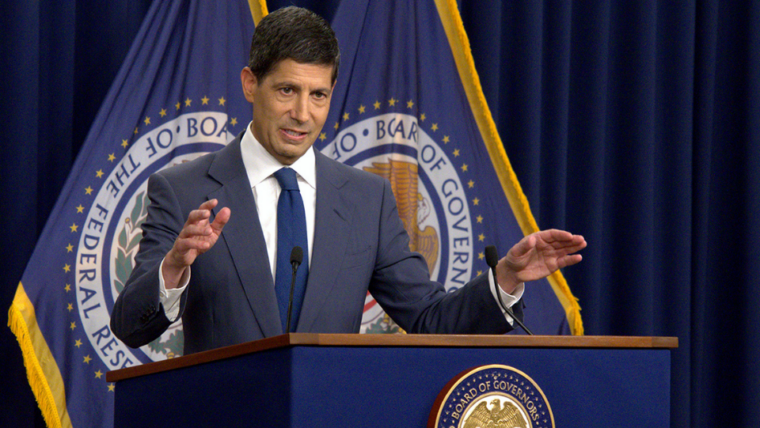
By Federal Reserve Chair Kevin Warsh used his first Jackson Hole keynote to put price stability first and push back on the idea that inflation is beaten, striking a hawkish tone on his 100th day in the job. Speaking Friday, he reaffirmed the Fed’s 2% inflation target as “firm, fixed,” said this summer’s better data does not convince him underlying trends have improved, and warned the Fed has “work to do” if it cannot get comfortable that inflation is heading to target.
Markets read it as a threat to raise rates, not cut them, yet the reaction split. Equities rose modestly across all three major indices, while gold and Bitcoin fell and the front end of the Treasury curve jumped. The clearest signal was in rate expectations: the odds of a September hike, which had faded through August, snapped higher. For traders, a hawkish speech that offered no explicit guidance left the tape to do the talking.
What Warsh Said: Price Stability First, and No Forward Guidance
The speech, titled “In Our Time,” doubled down on Warsh’s most controversial change at the Fed: a refusal to spell out where rates are headed, a stance FinanceFeeds covered when Warsh’s guidance-free, inflation-first Fed first took shape. He argued a “quieter Fed” serves the economy better and said the central bank should not “indulge a regime in which market participants are looking primarily to the Fed for their next trade.”
The Fed’s preferred inflation gauge, the PCE index, is running at 3.7% over 12 months and 4.1% over six, well above target, and Warsh said he would be “hard pressed to describe broad financial conditions as restrictive,” with credit markets showing “few signs of policy restraint.” He pinned “65 months of sustained, elevated inflation” squarely on the central bank.
At the same time, he called the economy resilient, with unemployment at 4.1%, real consumer spending up more than 2%, and business capex rising at its fastest since 2021, more than half of it tied to the AI buildout. The remarks raised the strong possibility that the Fed’s next move is a hike, not a cut, which is how the market took it too.
The Equity Reaction: Stocks Rose Despite the Hawkish Tone
The stock market shrugged off the hawkish message. The S&P 500 rose 0.43%.
The S&P 500 rose 0.43% to about 7,764 on the day of Warsh’s speech. Source: TradingViewThe gains were broad but uneven, and the split is telling. The rate-sensitive Nasdaq 100 lagged, adding just 0.22%, as higher-for-longer rates weigh most on high-multiple growth names.
The Nasdaq 100 rose 0.22% to about 29,706, lagging the broader market as a hawkish Fed pressures rate-sensitive growth stocks. Source: TradingViewDow Jones, tilted toward value and cyclicals, outpaced the Nasdaq with a 0.38% gain, the kind of rotation you would expect when the rate outlook hardens.
The Dow rose 0.38% to about 53,778, outpacing the Nasdaq in a value-over-growth tilt. Source: TradingViewInvestor Takeaway
The Nasdaq lagging the Dow is the cleaner signal inside the rally, since rate-sensitive growth underperforming value is exactly the rotation a higher-for-longer stance produces.
Gold, Bitcoin, and the Curve: The Cross-Asset Read
Away from equities, the hawkish read showed up more clearly. Gold, which struggles when real rates rise, slipped 0.58% to about $4,575.
Gold fell 0.58% to about $4,575 as a hawkish Fed lifted the outlook for real rates. Source: TradingViewBitcoin, the higher-beta risk asset, fell harder, down 1.10% to about $79,400, extending a pullback from earlier in the week.
Bitcoin fell 1.10% to about $79,400, the sharpest move among the major assets on the day. Source: TradingViewThe bond market, meanwhile, reacted cleanly to the speech. Short-dated yields jumped while long-dated yields slipped, a classic hawkish flattening: the 2-year rose about 7.6 basis points to 4.31% as hike risk got repriced, while the 30-year fell about 1.8 basis points to 5.18%, easing off the 19-year high it hit last week.
Front-end Treasury yields rose while the long end fell on the day of the speech, a flattening consistent with higher near-term rate risk. Source: TradingEconomics (yields as of Aug 28) · Chart: FinanceFeedThat long-end move sits against a live macro cross-current. Treasury Secretary Scott Bessent’s plan to expand the government’s debt-buyback program to at least double its normal size, starting September 9, has supported long-dated bonds and, economists say, complicated Warsh’s hand. As Axios reported, RSM’s Joseph Brusuelas described the Fed chair as caught “between a rock and a hard place,” a dynamic that runs through the same elevated long-term yields FinanceFeeds has tracked.
September Hike Odds: From 77% to 55.7%
The most concrete market response was in rate-hike pricing, and here FinanceFeeds has the throughline. After July’s meeting, when Warsh held the target at 3.50% to 3.75%, our coverage of the FOMC decision put September hike odds at 77%. Those odds then faded through August as the market doubted the Fed would follow through, dropping to about 35% the day before this speech.
Warsh’s remarks reversed that drift. By Friday, CME FedWatch showed a 55.7% probability that the Fed raises rates to 3.75% to 4.00% at its September 16 meeting, up from 35.4% a day earlier, against a 44.3% chance of no change. A cut is not meaningfully priced at all.
CME FedWatch showed a 55.7% chance of a September rate hike after the speech, up sharply from 35.4% the prior day. Source: CME FedWatch, Aug 28So the story of the day is a market that had talked itself out of a September hike being pulled back toward one. The 77% from July never fully held, but Warsh’s refusal to declare victory on inflation put the hike squarely back in play.
What Comes Next: PCE, September 16, and the Bessent Cross-Current
The PCE inflation report lands the day after the speech, and a hot print would harden the hawkish case Warsh laid out, while a soft one would give the doves something to work with into the September 16 decision. Between now and then, the Bessent buyback expansion on September 9 keeps a hand on the long end, meaning the Treasury and the Fed are pulling on different parts of the curve at the same time.
The deeper question is the one Warsh deliberately left open: without forward guidance, the market has to price the Fed off the data alone. That is the world he wants, a quieter Fed and sharper market signals, and Friday was the first real stress test of it. On the evidence of the tape, the message landed: hawkish enough to move hike odds and flatten the curve, without a single explicit promise about what the Fed will do next.
Investor Takeaway
The September 16 decision is now a live hike-or-hold question, not a cut debate, so the market is positioned for the Fed’s next move to be up or nowhere, not down.