
 By
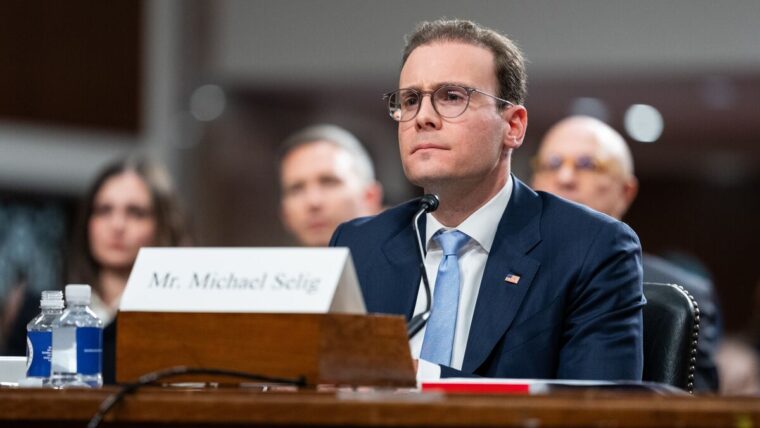
US Commodity Futures Trading Commission Chairman Michael Selig has cited the recent Binance security breach as evidence that offshore cryptocurrency exchanges should operate under stronger regulatory oversight, including cybersecurity requirements comparable to those applied in American financial markets.
Speaking to CNBC on October 30, 2026, Selig said the incident reinforced the CFTC’s argument for establishing a federal registration framework for cryptocurrency trading platforms.
The comments followed Binance’s disclosure of a security incident involving approximately $6.3 billion in affected cryptocurrency assets, potentially the largest exchange theft in industry history. Selig argued that offshore trading venues often operate without safeguards equivalent to those required of federally regulated US exchanges.
He proposed giving eligible platforms an opportunity to register with the CFTC and comply with federal requirements covering cybersecurity and market oversight. However, the proposed framework has not been finalized, and the agency does not currently possess unrestricted authority to require every offshore cryptocurrency exchange to register.
Binance Breach Reinforces CFTC’s Regulatory Proposal
The Binance incident began on October 29, when attackers reportedly gained unauthorized access to exchange-controlled cryptocurrency wallets. Binance initially identified a compromised DevOps engineer’s laptop as a possible entry point, although subsequent investigations indicated a more complex attack involving additional vulnerabilities.
The exchange pledged to cover customer losses using corporate resources and emergency reserves while coordinating asset freezes and recovery efforts. Blockchain investigators subsequently linked the attack to North Korea’s TraderTraitor operation, although technical investigations into the precise intrusion method continued.
Selig distinguished the suspected infrastructure compromise from a failure of the underlying blockchain. He argued that the attack appeared to involve weaknesses in operational security rather than a fundamental vulnerability in Ethereum or its smart contracts.
The chairman also highlighted blockchain transaction transparency as a potential advantage for investigators seeking to trace stolen assets. Although cryptocurrency transfers can move rapidly across networks, public blockchain records allow investigators to follow transactions even when attackers attempt to obscure their destinations.
Selig said the incident supported the CFTC’s effort to introduce cybersecurity safeguards for trading platforms handling customer assets. His comments did not establish that existing US regulatory requirements would necessarily have prevented the attack.
Federal Registration Proposal Faces December Comment Deadline
The CFTC’s latest initiative began on October 5, when the agency proposed developing tailored rules for certain retail cryptocurrency transactions involving leverage, margin or financing. The proposal was published in the Federal Register on October 13, with public comments scheduled to close on December 14, 2026.
The framework would address retail commodity transactions in crypto assets under existing provisions of the Commodity Exchange Act. It also contemplates a registration category for platforms offering qualifying products.
Under Selig’s approach, eligible offshore exchanges could seek federal oversight rather than operating entirely outside the US regulatory system. Registration would potentially involve cybersecurity controls, customer protections, custody standards and market surveillance obligations.
However, the proposal remains at an early regulatory stage and does not automatically extend CFTC jurisdiction to every offshore spot cryptocurrency exchange. Broader mandatory oversight could require additional congressional legislation.
The debate comes as lawmakers continue discussing the division of cryptocurrency regulatory responsibilities between the CFTC and Securities and Exchange Commission. Supporters of expanded federal supervision argue that consistent standards could reduce regulatory uncertainty and improve customer protections.
Others question whether existing derivatives legislation provides sufficient authority to regulate the full range of cryptocurrency trading activities. The Binance incident has intensified that discussion by demonstrating the potential scale of losses associated with failures in exchange infrastructure.
For offshore platforms, the immediate significance is increased scrutiny of custody practices, cybersecurity controls and access to US markets. For regulators, the challenge is translating proposed safeguards into enforceable requirements without exceeding existing statutory authority.
The CFTC’s December comment deadline will provide the next formal opportunity for industry participants to respond to the proposed framework.