
 By
By What Would California’s Memecoin Bill Ban?
California lawmakers have unanimously passed legislation restricting crypto platforms from offering memecoins tied to public officials, targeting potential conflicts of interest and what lawmakers describe as “pay-to-play arrangements.”
The state Senate approved Assembly Bill 2409 in a 40-0 vote on Wednesday, followed by a 78-0 Assembly vote concurring with Senate amendments. The bill has entered the enrolled stage and now awaits the governor’s signature.
If signed, the restrictions would apply to memecoins issued on or after Jan. 1, 2027. Digital asset service providers would be prohibited from offering those tokens to California residents when they are issued by, or in partnership with, federal public officials or state and local public officers.
The legislation defines a memecoin as a digital asset whose value is derived primarily from public interest, speculation or community engagement. That definition is intended to distinguish politically connected speculative tokens from digital assets designed primarily for payments, investment products or other functions.
The measure does not amount to a general California ban on memecoins. Instead, it targets the relationship between public office and token issuance, where lawmakers see a risk that buyers could purchase an official-linked asset partly to gain political access or financially benefit the person holding office.
Why Are Lawmakers Targeting Political Memecoins?
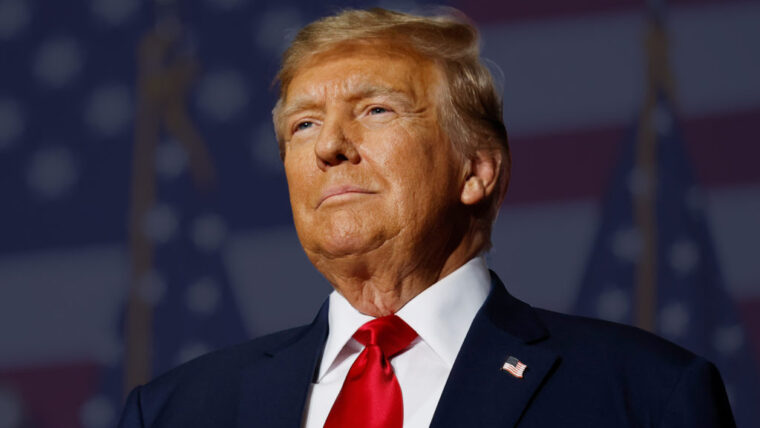
The debate has intensified following the launch and subsequent volatility of Official Trump, the memecoin linked to U.S. President Donald Trump. Investors in TRUMP are estimated to be about $3.2 billion underwater, with most of those losses unrealized, according to consumer advocacy group Public Citizen.
TRUMP remains the fifth-largest memecoin, with a market capitalization of about $688 million. The token gained 53% during the past week, recovering part of a decline that still leaves it down about 67% over the past year.
The financial losses are only one part of the policy debate. A token linked to a sitting public official creates questions that conventional political fundraising rules were not designed to address. Buyers can trade the asset globally, prices can change dramatically within hours, and increases in demand can financially benefit parties associated with the token without functioning like a traditional campaign contribution.
California’s legislation attempts to address that problem at the distribution level. Rather than trying to stop federal or out-of-state officials from creating tokens, the state would restrict regulated service providers from making newly issued qualifying memecoins available to California residents.
Investor Takeaway
California’s bill turns political memecoins into a platform-access issue. If signed, exchanges serving California customers would need to determine whether newly issued tokens have prohibited links to public officials before making them available for trading.
What Would The Bill Mean For Crypto Exchanges?
The practical burden would fall heavily on digital asset service providers. Exchanges and other platforms serving California residents would need procedures for identifying whether a new memecoin was issued by, or through a partnership with, a covered public official.
That could make politically connected tokens harder to list even when the relationship with an official is not straightforward. Platforms with conservative compliance policies may decide that avoiding certain listings is cheaper than determining whether a token falls within the statutory definition.
The Jan. 1, 2027 cutoff is also important. The restrictions described in the bill apply to tokens issued on or after that date, meaning the measure is designed primarily to limit future launches rather than retroactively prohibit every existing political memecoin.
For token issuers, California matters because restricting access in one of the largest U.S. markets can reduce liquidity and make nationwide exchange support less attractive. A platform could technically apply different listings by state, but maintaining geographically segmented token availability creates additional compliance and operational costs.
Could Political Crypto Complicate Federal Legislation?
The California vote arrives while crypto-related ventures associated with the Trump family are also affecting negotiations over federal digital asset legislation.
Those business interests have become part of negotiations surrounding the Digital Asset Market Clarity Act, the proposed federal framework for determining how cryptocurrency markets and intermediaries should be regulated.
A bipartisan ethics addendum that has not been made public would reportedly address required divestitures by allowing Trump to defer capital gains taxes associated with them. Such treatment could produce tax savings worth millions of dollars, adding another point of contention to negotiations over the legislation.
California’s approach addresses only one part of that larger debate, but the unanimous votes suggest political memecoin restrictions can attract support separate from broader disagreements over cryptocurrency regulation.
If the governor signs AB 2409, California would establish a clear boundary between public office and access to newly issued speculative tokens. For crypto platforms, the next question would be how broadly the state interprets partnerships with public officials and how exchanges determine which tokens must be excluded when the restrictions take effect in 2027.