
 By
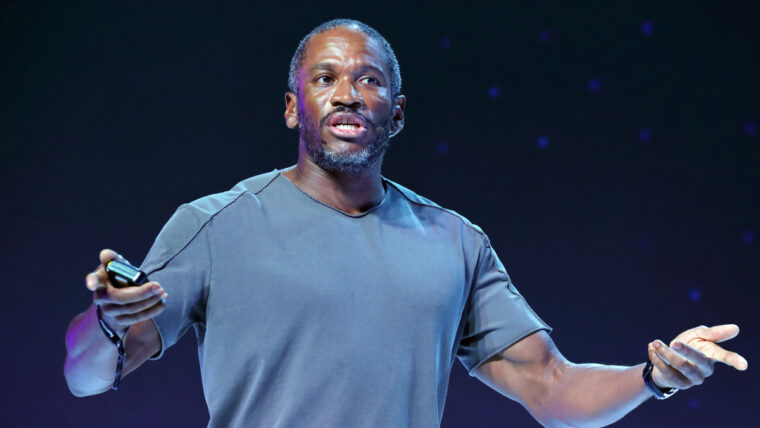
By BitMEX co-founder Arthur Hayes has announced that he is “coming out of retirement” to lead Flop Labs, a new crypto project targeting the emerging economy of autonomous artificial-intelligence agents, with an unusual launch schedule that puts its token distribution ahead of the blockchain itself.
Hayes announced the move on August 18, describing FLOP as a currency intended to pay for resources consumed by AI agents. Flop Labs separately introduced Flop Network as infrastructure through which autonomous software could purchase computing capacity, store information and transact without requiring humans to authorize every interaction.
The project plans what Hayes described as a “massive” FLOP airdrop during the fourth quarter of 2026. Flop Network’s genesis block, however, is not expected until the first quarter of 2027.
That leaves a potentially months-long period between token distribution and the launch of the network on which FLOP is ultimately intended to function.
Hayes said the project will have no presale and no venture-capital allocation and characterized the distribution as a “100% fair launch.” Detailed eligibility rules and the size of the planned airdrop have not yet been disclosed.
Flop Wants AI Computation to Secure Its Network
Flop Network describes itself as a “proof-of-useful-inference” protocol, attempting to connect blockchain incentives directly with computational work performed for AI agents.
Under the preliminary model, miners would supply computing resources to process inference requests and receive FLOP. Validators would verify that work, help maintain decentralized storage and receive fees and block rewards. AI agents would spend FLOP to access computation and persistent memory while also using the network to transact with other agents.
The concept differs from conventional proof-of-work networks such as Bitcoin, where miners expend computing resources primarily to secure consensus. Flop’s proposal instead seeks to make that computation economically useful by directing it toward AI workloads.
How that mechanism will work technically remains unclear. Flop Labs has not published detailed documentation explaining how validators would independently verify AI inference, handle non-deterministic model outputs or penalize incorrect computation.
The project also envisions rewards for influencers and community partners based on the traffic they generate for Flop, according to its preliminary materials.
Tokenomics and Technical Details Remain Missing
Despite the planned Q4 airdrop, Flop Labs has yet to publish a whitepaper, detailed tokenomics, total FLOP supply, issuance schedule or comprehensive allocation structure. No public smart-contract implementation or independent security audit has been disclosed either.
The sequencing therefore makes FLOP’s launch particularly unusual. Token recipients could receive an economic claim associated with Flop Network before the underlying blockchain has reached its genesis block and before many of the mechanisms determining the token’s value and utility have been publicly specified.
Hayes’ involvement nevertheless gives the project an unusually prominent launch platform. He co-founded BitMEX, which became one of crypto’s largest derivatives exchanges and helped popularize perpetual futures, before stepping down as chief executive in 2020. He subsequently became chief investment officer of Maelstrom, his family office, and a closely followed commentator and investor in digital assets.
Flop also places Hayes at the intersection of two of technology’s most heavily funded narratives: cryptocurrency and autonomous AI.
The next milestones will be whether Flop Labs publishes enough technical and economic detail to substantiate its proof-of-useful-inference model, followed by the proposed Q4 2026 FLOP distribution. Until the targeted Q1 2027 genesis block arrives, however, the project’s central economic network remains a proposal rather than an operating blockchain.