
 By
Memory stocks including Micron, SK Hynix and SanDisk suffered losses on Friday as continued weakness in Nvidia weighed on semiconductor shares and intensified concerns about the sustainability of the artificial intelligence trade.
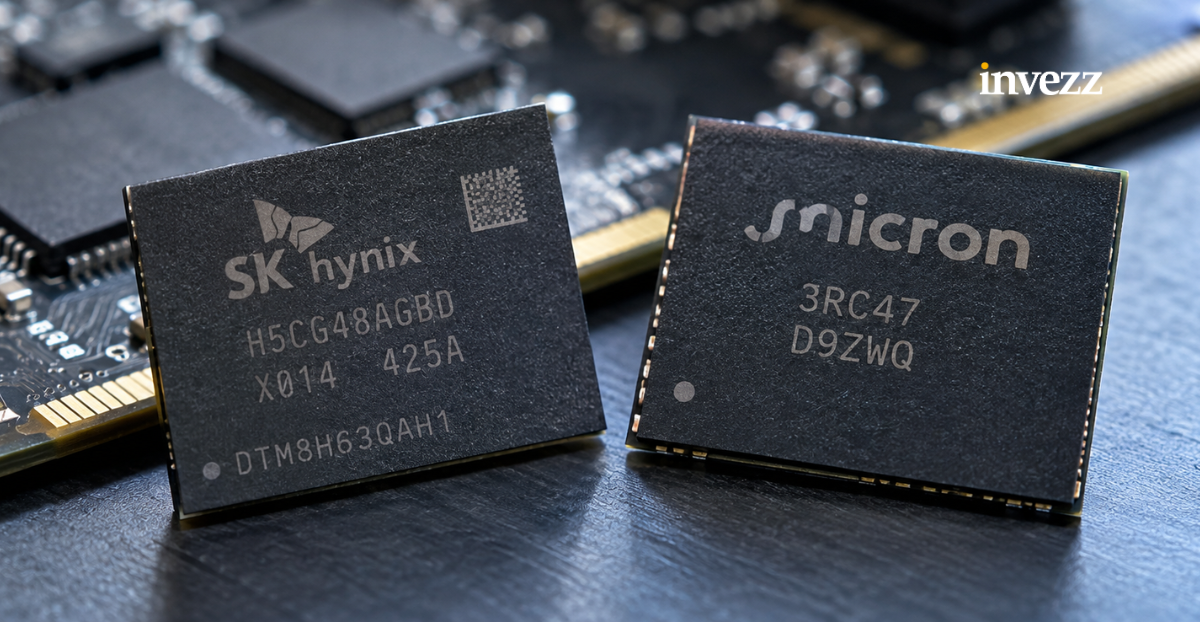
Micron MU and SK Hynix fell around 5% each, while SanDisk plunged 8%.
Nvidia slipped more than 4%, dragging the Philadelphia Semiconductor Index down over 5%.
The losses were considerably steeper than those in the broader market, with the Nasdaq falling 1.4% and the S&P 500 losing nearly 0.8%.
The selloff came even as October’s producer price index (PPI) data came in softer than expected.
However, headline PPI accelerated 6.5% annually, up 0.2 percentage points and marking its highest annual rate since November 2022.
Nvidia uncertainty spills over into memory stocks
The turmoil surrounding Nvidia has raised questions about the broader AI trade, given the chipmaker’s central role in the industry’s expansion and its financial relationships with several companies across the ecosystem.
Investors are increasingly weighing concerns about AI infrastructure spending, debt financing, and the returns on massive capital investments.
Prolonged uncertainty around Nvidia could put additional pressure on valuations across the semiconductor sector.
China adds another layer of uncertainty.
Tighter US restrictions on advanced chips could accelerate domestic semiconductor substitution while making it harder for Chinese cloud companies to access sophisticated computing technology.
Memory stocks were already under pressure before Friday’s decline.
Micron has lost around 21% over the past month, while SK Hynix is down approximately 18%.
The stocks also suffered a sell-off following Democratic victories in both houses of Congress, amid concerns that the political outcome could slow data centre construction across the US.
According to Charu Chanana, chief investment strategist at Saxo, further trouble at Nvidia could particularly affect SK Hynix and Micron.
SK Hynix’s leading position as a supplier of high-bandwidth memory (HBM) for Nvidia leaves it exposed to potential disruptions in the chipmaker’s product roadmap.
However, demand for advanced memory from other AI platforms could remain strong, providing some support to the stock.
For Micron, Nvidia-related delays could affect near-term demand expectations for advanced memory.
Nevertheless, competing AI accelerator platforms also require high-performance memory, which could help cushion the impact.
SanDisk faces additional NAND pricing concerns
SanDisk suffered a steeper decline, with shares falling 8% on Friday and losing more than 42% over the past month.
The latest pressure followed a warning from Kioxia about a potential surge in NAND flash prices, raising fresh questions about competitive pricing dynamics and the sustainability of SanDisk’s elevated gross margins.
Also, the company’s data centre business, which generated the bulk of its recent revenue growth, is heavily dependent on AI infrastructure spending linked to Nvidia’s GPU ecosystem.
Any perceived threat to Nvidia’s strategic continuity could therefore translate into uncertainty over future NAND flash demand.
However, Evercore ISI remains optimistic about SanDisk’s longer-term prospects.
The brokerage reiterated its Outperform rating and $2,500 price target on Wednesday, arguing that investors are underestimating structural changes in the memory chipmaker’s business.
The firm held investor meetings with CEO David Goeckeler and head of investor relations Ivan Donaldson over the past two days.
“We think investors remain overly focused on how long NAND pricing can stay elevated rather than appreciating the structural changes to SNDK’s model,” Evercore wrote.
Management sees a changing NAND market in which suppliers manage output to match demand rather than simply maximise production.
Price increases have now lasted around six quarters, compared with roughly two quarters historically.
Gross margins above 80% also reduce suppliers’ incentive to chase market share.
Evercore believes SanDisk’s multi-year supply agreements, which include committed demand, price floors and ceilings, and financial guarantees, could limit downside risks during a future downturn.
The brokerage also said data centre demand remained robust, with customers seeking additional supply for AI systems being deployed now.
A shift towards more durable, specialised memory could further tighten industry supply.
“NBMs + supply discipline should support more durable profitability, while AI demand + HBF provide incremental growth opportunities,” the firm said.
AI disclosure: AI tools assisted with research and drafting of this piece. An Invezz editor reviewed the facts, sources and wording before publication. Any opinions or analysis are Invezz’s, not those of an automated system.
The post Why are Micron, SK Hynix, and SanDisk stocks falling on Friday? appeared first on Invezz