
 By
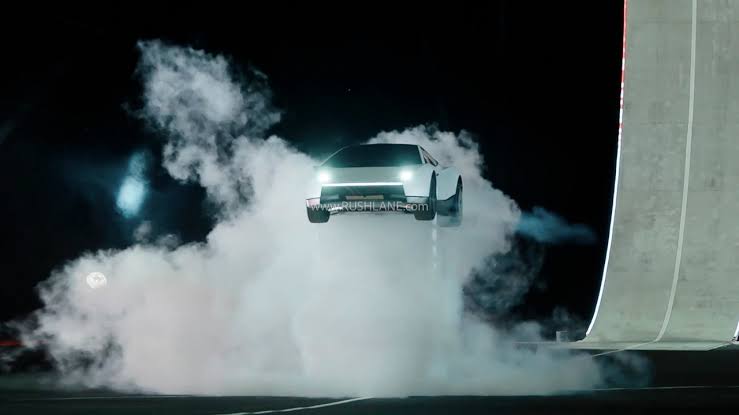
By Tesla’s next-generation Roadster finally performed the stunt Elon Musk had teased for years: the car drove upside down, lifted off and turned in the air using a fan-based suction system and SpaceX-developed thrusters. The demonstration Reuters witnessed gives Tesla a headline-grabbing product moment days before its third-quarter earnings call. For TSLA, however, the near-term question is whether the spectacle can change expectations for earnings, cash flow or future growth before investors return to the company’s financial results on Wednesday, October 21.
The Roadster can create a short-lived sentiment trade. It is much less clear that it can drive a lasting revaluation. Tesla has not announced a final price, and production is not expected to start until 2028. Musk himself has described the car as having limited financial importance. That leaves the launch competing with the numbers investors will hear next week: margins, cash generation, spending and the pace of Tesla’s robotaxi and robotics plans.
The First Stock Reaction Is Still Incomplete
Tesla shares closed the regular session at $362.44 on Thursday, down 1.29%, before the evening reveal. That means the close cannot be read as a verdict on the flying Roadster. Early reports on after-hours trading described a modest initial rise, but the price action was thin and inconsistent. The first full U.S. session after the event had not begun when this article was prepared.
The setup matters because Tesla was already trading around a major catalyst. Its shares rallied after the company reported 486,532 third-quarter deliveries, beating the company-compiled analyst consensus by about 5.3%, but the total was still 2.1% below the year-earlier quarter. FinanceFeeds’ breakdown of the delivery beat showed why the earnings report remains more consequential: Tesla delivered 22,141 more vehicles than it produced, and investors still do not know what that inventory draw means for automotive margins.
Thursday’s $362.44 close was also below the $370.59 level reached after the delivery release and above the $354.11 close immediately before it. Those levels offer a recent, observable reference range, not a forecast. A Roadster-driven rally that carries TSLA back above $370.59 would suggest buyers are willing to extend the delivery-led move. A slip toward $354.11 would indicate that the event failed to offset pressure from earnings uncertainty. Neither threshold by itself would establish a change in Tesla’s longer-term fundamentals.
A Halo Car Can Add Narrative Value, Not Much Near-Term Revenue
The strongest bullish case is not that Roadster sales will transform Tesla’s quarterly results. It is that the vehicle can refresh the company’s image, demonstrate engineering capability and keep attention on Tesla’s broader technology story. A product that appears to fly can generate global attention in a way a routine model update cannot. The unveiling may also help Tesla present itself as more than a mass-market electric-car maker at a time when investors are weighing the potential value of autonomy, artificial intelligence and robotics.
That narrative is already embedded in Tesla’s valuation. The Roadster therefore needs to do more than attract views to create durable upside. Investors would need evidence that the technologies shown can be made reliable, legal and manufacturable, or that they contribute to other products with larger markets. Tesla’s own demonstrations do not yet establish how the thruster system will work in ordinary road use, what the final car will cost, or how many units the company can produce.
There is also a substantial credibility hurdle. The second-generation Roadster was first shown in 2017, and Tesla now says production is planned for 2028. The gap between a dramatic prototype demonstration and customer deliveries gives traders a reason to discount the product timeline. Musk said the Roadster would not move Tesla’s finances in a major way; the event’s symbolism may be meaningful, but the chief executive’s own framing limits the case for treating it as an imminent earnings driver.
For recent context on how Tesla’s technology announcements translate into market pricing, see FinanceFeeds’ analysis of Tesla’s robotaxi launch reaction. The initial excitement around a new service did not by itself settle the question of whether Tesla can turn autonomy into a material operating business.
Three Paths for TSLA Before the October 21 Call
Bullish sentiment extension: The Roadster’s reach brings buyers back into TSLA, and the stock retests the $370.59 post-delivery close before earnings. This would be a momentum response to the product reveal, especially if the broader market is supportive. For that move to hold, investors would still need reassuring financial results or credible progress on autonomy and robotics. A burst of attention alone could fade once the call shifts the focus back to margins and capital spending.
Range trading: Traders treat the Roadster as a showcase rather than a new earnings stream, leaving the stock between the recent $354.11 and $370.59 closes while they wait for Wednesday’s results. This may be the most defensible near-term reading if Tesla supplies no additional detail on price, orders, delivery timing or the commercial use of the flying system. The range is narrow enough that earnings commentary could quickly overwhelm the event’s effect.
Sell-the-news risk: The initial pop fades and TSLA moves back toward or below $354.11 as investors question the long production timeline or turn to operating performance. That pressure could intensify if Tesla reports weaker margins, cash flow or guidance, or if management gives no measurable update on robotaxi deployment. FinanceFeeds’ coverage of Tesla’s prior earnings reaction documented how investors focused on capital expenditure and free cash flow even as the company made a broader technology investment case.
These are conditional paths, not price targets. The Roadster could lift sentiment into earnings, but it cannot insulate the shares from the results or outlook. Tesla’s recent stock scenario analysis also illustrates how widely investors can disagree about the value of its future businesses relative to its present financials.
Earnings Will Decide Whether the Rally Has Follow-Through
Tesla’s third-quarter report and webcast are scheduled for Wednesday, October 21, after the market close, with management’s Q&A at 5:30 p.m. Eastern Time. The company has already reported its delivery count, so the next catalyst is what those sales produced in revenue and profit. Investors will also listen for spending plans and updates on robotaxi, Optimus and other projects that support the technology-led valuation thesis.
Regulation remains part of that assessment. Tesla’s Cybercab has drawn questions about how a vehicle without conventional controls fits existing safety rules. FinanceFeeds has tracked the issue in its coverage of the NHTSA inquiry. The Roadster faces a different set of technical and legal questions, but the broader point is similar: ambitious demonstrations do not become scalable businesses until the company can show how they will operate within real-world requirements.
The flying Roadster is a potent attention event, and it could produce a sharp short-term move in either direction. It gives bulls fresh material for Tesla’s technology story and gives traders a catalyst ahead of earnings. But the product’s 2028 production target, undisclosed final pricing and limited near-term financial contribution make it difficult to build a fundamental share-price case around the launch alone. A durable TSLA move will depend on whether Wednesday’s numbers and management’s outlook validate the much larger growth story the Roadster is meant to symbolize.