
 By
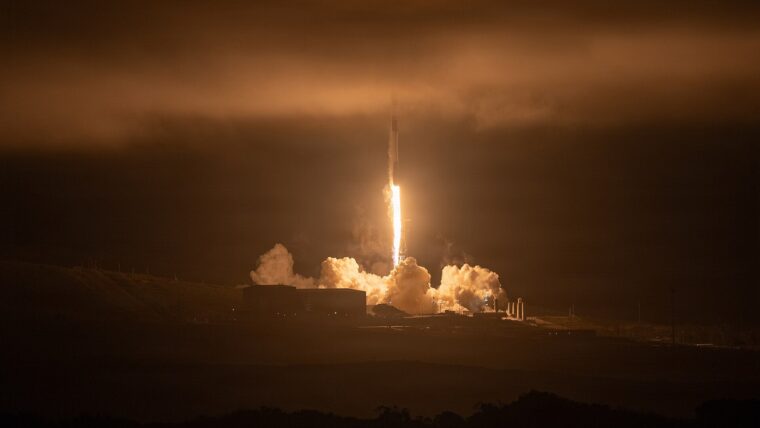
By Project Suncatcher is not a space story. On 1 October, Google will fly a refrigerator-sized prototype carrying four Trillium TPUs on SpaceX’s Transporter-18 rideshare from Vandenberg Space Force Base, and almost every write-up will file it under moonshots. The correct filing is energy procurement. The single figure Google keeps returning to is that a satellite in a near-constantly sunlit orbit can harvest up to eight times more solar power than the same array on the ground — and power, not silicon, is now the binding constraint on every hyperscaler’s expansion plan. Alphabet closed at $342.36 on 24 September with a $4.19trn market capitalisation, and it is spending $195–205bn of capital this year. Against that, four chips in low Earth orbit is a rounding error bought as a call option on the thing that could cap the entire programme.
Having spent this year watching power contracts turn into equity instruments — Vistra taking a 5% stake in a data centre alongside a 207 MW Odessa agreement, Fermi’s $6.5bn TensorWave lease turning on a closing deadline rather than on chip supply — the orbital experiment reads as exactly what industrial buyers do when an input stops being available at any price. They go to where the input is stranded. Aluminium smelters moved next to hydro dams. Gas producers built floating liquefaction to escape onshore permitting. Compute is now heavy industry, and orbit is the largest stranded power resource in the solar system.
The insight: this is a negotiating position, not a product
Here is the asymmetry that makes the economics work even if the satellites never carry a production workload. A hyperscaler negotiating multi-decade power purchase agreements with utilities and independent power producers has, at present, no credible alternative to the grid. That is why the terms have moved so far in the sellers’ favour this year, why equity kickers have started appearing in power deals, and why the market has begun listing futures on the price of renting a GPU — a derivative that exists precisely because the underlying is scarce enough to need hedging.
An operator with a demonstrated, radiation-tested, thermally-validated path to off-grid compute does not need that path to be cheap. It needs it to be real enough to change the counterparty’s assumption about walk-away. The option value sits in the negotiation, not in the orbit. Four TPUs against a capital programme of up to $205bn is a ratio of roughly one to nothing — which is the point. Cheap options on binding constraints are the highest-return spend in any capital-intensive industry, and they are almost never modelled as such because they look like science projects on the P&L.
Key facts: Project Suncatcher’s first flight
Launch on SpaceX’s Transporter-18 rideshare from Vandenberg Space Force Base, California, scheduled for 1 October 2026, into a dawn-dusk sun-synchronous low Earth orbit — TeslaNorth, 24 Sep 2026
Payload: four Trillium-generation TPUs on a prototype roughly the size of a refrigerator, developed with Planet — Google and Planet, via contemporaneous reporting, 24 Sep 2026
Google’s core premise: orbits with near-constant sunlight can yield up to eight times more solar power than a comparable ground-based array — Google, Project Suncatcher announcement
Launch loads: about 10 minutes to orbit with sustained acceleration up to 10g, and 50–100g on individual components; the satellite was vibration-tested across all three axes — TeslaNorth, 24 Sep 2026
Radiation: TPUs were run under a proton beam at UC Davis’s Crocker Nuclear Laboratory and survived a total ionising dose greater than a five-year mission would deliver — Google research disclosure
Cooling uses heat pipes and radiators rather than airflow, validated in a thermal vacuum chamber — Google research disclosure
Next milestone: a two-satellite laser interlink test in 2027, with future satellites carrying dozens of TPUs in clusters — Google, Project Suncatcher
Competing supply: SpaceX is building a Gigasat Factory in Bastrop, Texas, to mass-produce AI-capable satellites as early as late 2027 — CoinCentral, 24 Sep 2026
What is actually being tested, and what would count as failure
Three physical questions gate everything, and Google has partially answered two of them on the ground. The first is survival. Getting to low Earth orbit takes roughly ten minutes of sustained acceleration up to ten times gravity, with individual components seeing 50 to 100g. Google vibration-tested the satellite across all three axes and reported being pleasantly surprised that the hardware came through. The second is radiation. Bit flips from cosmic rays and solar events are the classic failure mode for commercial silicon in orbit, and Google ran live AI workloads on Trillium TPUs inside a proton beam at UC Davis’s Crocker Nuclear Laboratory, reporting that the parts survived a total ionising dose in excess of a five-year mission.
The third question has no ground answer, and it is the one that will decide the programme. Heat. A TPU dissipates a great deal of energy in a small area, and a vacuum offers no airflow, so every watt has to leave through a radiator. Google is combining heat pipes with radiative surfaces and has run the design in a thermal vacuum chamber, but thermal behaviour in a real dawn-dusk orbit — with the panel in permanent sun and the radiator seeing deep space — is not something a chamber reproduces faithfully. If this mission returns one durable number, it will be sustained thermal throughput per TPU, and that number will set the density of every future cluster.
Failure, incidentally, would not be the satellite dying. Failure would be the satellite living and delivering a duty cycle so low that the effective cost per useful FLOP is an order of magnitude worse than a terrestrial rack. That is the outcome the market should be watching for, and it is not the outcome anybody will lead with.
Market impact: what actually reprices
Very little of this touches Alphabet’s earnings in any modelled period, and pretending otherwise is how commentary about moonshots goes wrong. Alphabet’s capital programme is underwritten by cloud demand, not by orbital compute. What changes is narrower and more useful.
First, the power trade. Every credible off-grid pathway weakens the scarcity premium currently embedded in data-centre power contracts. That premium is visible in real transactions — equity stakes attached to megawatts, closing-deadline covenants in lease agreements — and it has been one of the better-performing themes of 2026 for independent power producers. An orbital demonstration does not break the premium. It puts a ceiling in the far future and gives the largest buyers a talking point today.
There is a second-order number worth putting next to the launch. Alphabet’s capital programme is being underwritten by a Google Cloud backlog that stood at $514bn when the 2026 guidance was raised — contracted revenue that has to be delivered out of physical capacity, on a schedule, to counterparties with contracts. That is the exposure. A backlog is a promise to supply compute, and compute is a promise to supply power. When the constraint on delivery shifts from silicon allocation to grid interconnection queues and substation lead times, a contracted backlog stops being pure visibility and starts carrying execution risk. Every serious off-grid experiment is therefore a hedge against a delivery failure on a half-trillion-dollar obligation, which is a rather different framing from “moonshot.”
Second, launch cadence. Transporter rideshare slots are the cheapest route to orbit for a payload of this class, and they are the same slots the rest of the industry needs. A hyperscaler entering the rideshare queue as a recurring customer is a demand signal for launch services, and SpaceX’s Gigasat Factory in Bastrop — targeting mass production of AI-capable satellites as early as late 2027 — suggests the supply side is industrialising before the demand is proven. That sequencing should look familiar to anyone who watched neoclouds build capacity against contracted-but-unbuilt demand; it produced spectacular returns and then spectacular volatility. The index mechanics around SpaceX’s listed shares mean that demand signal now transmits directly into passive flows as well.
QuestionEvidence forEvidence against
Can the chips survive?Vibration-tested on three axes; proton-beam dose beyond a five-year missionGround testing has never fully predicted orbital single-event upsets in commercial silicon
Is the power real?Up to 8x the yield of a ground array in a near-constantly sunlit orbitPower is only half the problem; rejecting the resulting heat is the unsolved half
Can clusters be built?Laser interlinks tested with two satellites in 2027; SpaceX industrialising satellite supplyOptical alignment at these tolerances is described by Google as hitting a coin-sized target from miles away, with both ends moving
Does it change the capex math?Cheap option against a $195–205bn programme; strengthens grid negotiating position nowNo revenue, no production workload, and a 2027 milestone before anything scales
The regulatory tension nobody has priced
Putting advanced AI accelerators in orbit raises a question that has no clean answer: where, legally, is the chip? Export controls on leading-edge accelerators are built around jurisdictions, end users and physical locations. A satellite in a sun-synchronous orbit passes over every jurisdiction on Earth roughly fifteen times a day, and the compute it performs is delivered by radio link to whoever is licensed to receive it. The control regime assumes a data centre with an address. Orbital compute does not have one.
That is not a theoretical problem for long. If the 2027 interlink test works, the natural commercial product is inference sold from orbit to customers on the ground — and the first time that service is offered to a customer in a restricted jurisdiction, somebody will have to decide whether the export happened at the launch pad, at the ground station, or not at all. Regulators are behind this, and the industry has an incentive to keep them there.
The second regulatory seam is orbital. Spectrum coordination and ITU filings gate the laser and radio links; the prototype is expected to operate for about a year, with reentry well inside the debris-mitigation guidelines that increasingly govern LEO; and constellations of compute satellites would need slot allocations at a scale that currently belongs to communications operators. None of that stops a four-chip demonstrator. All of it constrains a cluster.
Three predictions
One: the 2027 two-satellite laser test, not this launch, is the number to trade. A single satellite proves survivability. Only the interlink proves that orbital compute can be a cluster rather than a curiosity, because training and large-batch inference are bandwidth problems long before they are power problems. If the 2027 test delivers usable inter-satellite bandwidth, expect the follow-on announcement within two quarters to be a launch-services frame agreement rather than a satellite programme — hyperscalers buy capacity, they do not build rockets.
Two: orbital compute will be sold as power arbitrage before it is sold as compute. The first commercially coherent pitch is not “run your model in space.” It is “run the workloads that are indifferent to latency where the electricity is free and the cooling is a radiator.” That means batch inference, embedding generation and model evaluation — exactly the workloads currently soaking up marginal terrestrial megawatts at prices that keep setting records.
Three: the near-term financial instrument to watch is not space, it is the power contract. Expect utility and IPP contract terms with hyperscalers to keep tightening through 2027 — curtailment clauses, equity participation, take-or-pay floors — precisely because sellers know the buyers are searching for alternatives. The Vistra template of equity alongside megawatts is the leading indicator. Suncatcher will not loosen that market in this decade, but it explains why the largest buyer in the world is willing to spend engineering years looking for a door.
The launch itself will take about ten minutes and, if everything works, produce no visible result at all. That is the nature of an option. The information arrives later, in the thermal telemetry, and the people who should care most are not space investors but anyone underwriting a twenty-year power agreement against a data centre.
FAQ
What is Google’s Project Suncatcher?
Project Suncatcher is Google’s research programme exploring whether machine-learning compute can run on a constellation of solar-powered satellites carrying its Tensor Processing Units. The premise is that orbits with near-constant sunlight can generate up to eight times more solar power than an equivalent array on the ground. The first hardware flight carries four Trillium TPUs, with a two-satellite laser interlink test planned for 2027.
When is the Project Suncatcher launch?
The prototype is scheduled to fly on SpaceX’s Transporter-18 rideshare mission from Vandenberg Space Force Base on 1 October 2026, into a dawn-dusk sun-synchronous low Earth orbit. The satellite was developed with Planet and is roughly the size of a refrigerator.
Can AI chips survive in space?
Partially answered. Google ran AI workloads on Trillium TPUs inside a proton beam at UC Davis’s Crocker Nuclear Laboratory and reported the parts survived a total ionising dose greater than a five-year mission would deliver, and it vibration-tested the satellite on all three axes for launch loads reaching 50–100g on individual components. The unresolved question is heat rejection, since a vacuum offers no airflow and every watt must leave through a radiator.
Does Project Suncatcher affect Alphabet’s earnings?
Not in any modelled period. Alphabet’s 2026 capital expenditure guidance of $195–205bn is underwritten by cloud demand, and Suncatcher generates no revenue. Its financial relevance is as a cheap option on the power constraint that governs the wider capital programme, and as a negotiating position against utilities and independent power producers.
Who else is building compute satellites?
SpaceX is constructing a Gigasat Factory in Bastrop, Texas, aimed at mass-producing AI-capable satellites as early as late 2027. That means the manufacturing supply for orbital compute platforms is being industrialised ahead of demonstrated demand — a sequencing that closely mirrors how terrestrial AI cloud capacity was built.
What regulatory issues does orbital compute raise?
Export control is the largest unresolved question, because controls on advanced accelerators are built around jurisdictions and physical locations while a satellite in sun-synchronous orbit overflies every jurisdiction daily. Beyond that, spectrum coordination and ITU filings gate the communication links, and constellations would require orbital slot allocations at a scale currently held by communications operators.