
 By
By What Does the New Zcash ETP Offer Investors?
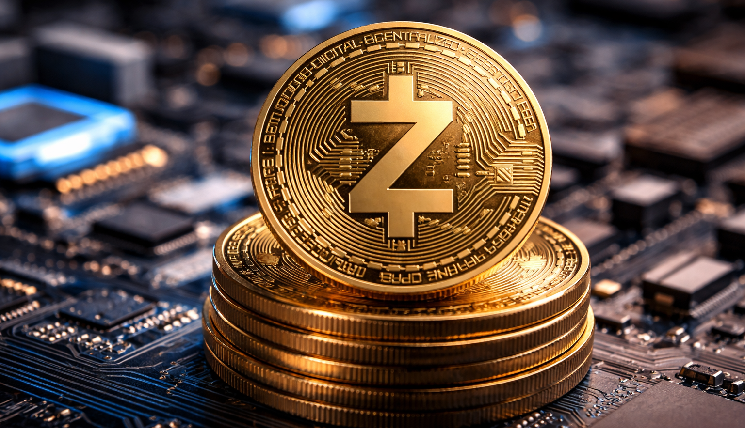
European asset manager 21Shares has launched the region’s first exchange-traded product tied to Zcash, giving investors regulated brokerage access to the privacy-focused cryptocurrency after a sharp rise in ZEC prices and growing demand for listed crypto products beyond Bitcoin and Ether.
The 21Shares Zcash ETP, trading under the ticker ZCASH, began trading Tuesday on Euronext Paris and Euronext Amsterdam. The product is physically backed, meaning ZEC is held to support the securities rather than the fund relying on derivatives to reproduce the token’s price movements.
The structure allows investors to gain Zcash exposure through conventional investment accounts without managing wallets, private keys or direct cryptocurrency custody.
21Shares simultaneously launched a physically backed ETP linked to ETHFI, the governance and utility token of decentralized finance protocol ether.fi. The ETHFI product is also listed in Paris and Amsterdam.
Both products charge an annual management fee of 2.5%. That makes them considerably more expensive than many Bitcoin and Ether products available in Europe. For comparison, some of 21Shares’ core Bitcoin and Ethereum products currently charge fees well below 1%.
Why Is Zcash Attracting Exchange-Traded Products Now?
The European launch follows Zcash’s rapid move into regulated investment markets in the United States. Grayscale’s Zcash fund began trading on NYSE Arca under the ticker ZCSH on August 25, completing the conversion of its existing trust into an exchange-traded product.
The U.S. product surpassed $500 million in assets within two weeks of its NYSE Arca debut, while options trading was subsequently introduced. The expansion gave U.S. investors listed spot exposure to a cryptocurrency whose privacy features have historically complicated its relationship with regulated exchanges and financial institutions.
21Shares now brings a similar access route to European investors. The timing also follows one of Zcash’s strongest price runs in years. ZEC recently traded above $1,500 after beginning September near $850 and was around the mid-$1,400s on Tuesday.
The rally has revived comparisons between Zcash and Bitcoin. Both networks use proof-of-work mining and have maximum supplies of 21 million coins, but Zcash adds optional shielded transactions designed to conceal transaction information. A deeper comparison of the two networks can be found in FinanceFeeds’ breakdown of the differences between Zcash and Bitcoin.
Investor Takeaway
Zcash is moving from a specialist privacy asset toward a cryptocurrency that can increasingly be accessed through traditional brokerage accounts. The key test is whether regulated investment demand remains strong after the recent price surge, particularly given the new European product’s 2.5% annual fee.
Can Zcash Overcome the Regulatory Problem Facing Privacy Coins?
The growth of regulated Zcash products creates an unusual contrast. Institutional access is expanding at the same time that privacy-focused cryptocurrencies continue to face restrictions in some jurisdictions.
The Philippines, for example, has prohibited regulated crypto platforms from listing anonymity-enhancing cryptocurrencies, a category that can include Zcash and Monero. FinanceFeeds previously examined the Philippines’ restrictions on privacy coins and the compliance concerns surrounding assets designed to obscure transaction information.
Zcash differs from some privacy-focused competitors because privacy is optional rather than mandatory. Transactions can be transparent or use shielded addresses, a distinction that can matter when exchanges, custodians and investment-product issuers assess compliance risks.
Grayscale head of research Zach Pandl has argued that Zcash could benefit from “second-mover advantages” as it attempts to compete with Bitcoin’s established network effects. Earlier Bitcoin alternatives struggled to challenge the original cryptocurrency, but regulated custody, ETF access and improved market infrastructure now give newer investment products distribution channels that did not exist during previous crypto cycles.
Does Institutional Access Change the ZEC Market?
Listed products do not change Zcash’s underlying protocol, but they can change who can hold the asset and how capital reaches the market.
Professional investors that cannot hold cryptocurrency directly can potentially obtain ZEC exposure through regulated securities, while brokers and portfolio managers can incorporate the asset without building crypto custody infrastructure.
Interest has also extended to Zcash mining. Large operators have increased their exposure to the network as ZEC prices have risen, attracted by its proof-of-work model, fixed supply and renewed demand for privacy-focused assets.
The next question is whether Europe’s first Zcash ETP attracts sustained assets after the initial launch. Grayscale’s rapid U.S. asset growth provides an early indication that demand exists, but ZEC’s steep rally and the relatively high 2.5% European product fee raise the hurdle for investors entering after much of the recent price appreciation has already occurred.