
 By
By Micron Technology appears to be stepping up its high-bandwidth memory production as artificial intelligence demand continues to overwhelm supply, giving the chipmaker an opportunity to capture more of a fast-growing market.
According to South Korean news outlet Electronic Times, Micron is spending to double its high-bandwidth memory production capacity by the end of the year.
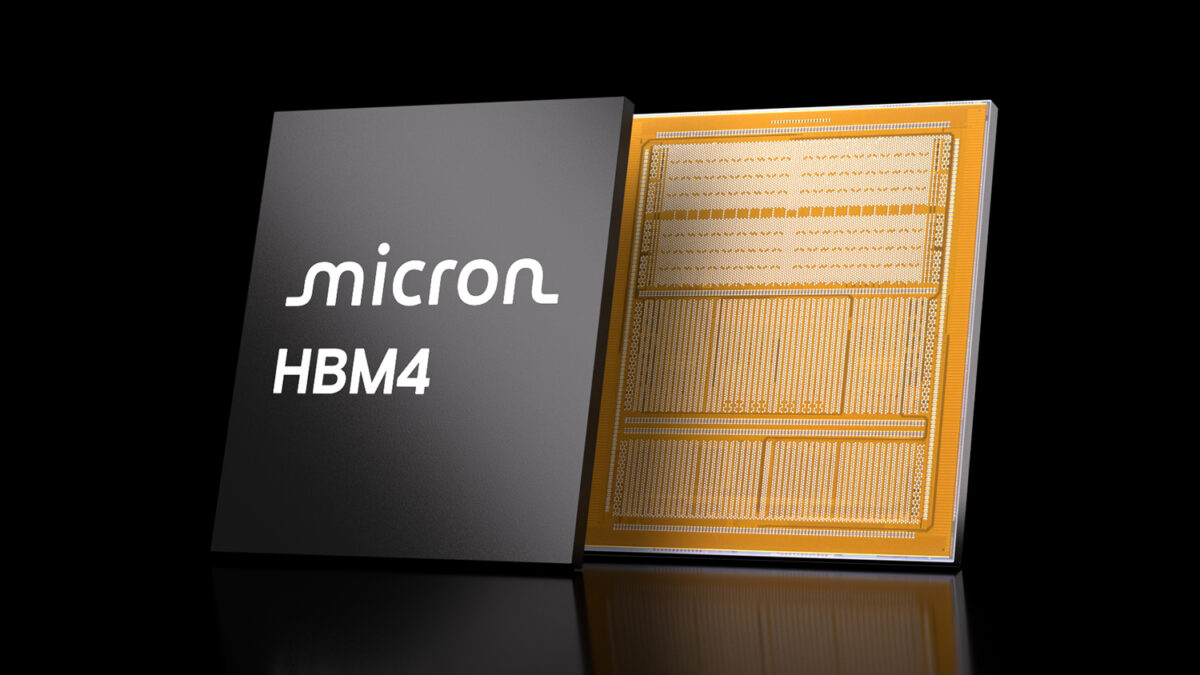
The move would help the US memory-chip maker narrow the gap with South Korea’s SK Hynix and Samsung Electronics as demand grows for its latest 12-layer HBM4 products.
HBM4 is the latest generation of high-bandwidth memory and is expected to be used alongside next-generation AI processors such as Nvidia’s Rubin graphics processing units.
HBM is manufactured by stacking multiple DRAM chips, allowing it to deliver much higher bandwidth while consuming less power than conventional memory.
The company has not commented on the reported expansion.
Micron looks to regain HBM market share
The capacity push comes as Micron faces increasing competition in the HBM market.
Samsung has more than doubled its share of the global HBM market over the past year, rising to 33% in the second quarter of 2026 from 15% a year earlier, according to Counterpoint Research.
Counterpoint expects Samsung to strengthen its position further as it ramps up HBM4 shipments during the second half of the year.
Micron, meanwhile, saw its market share fall to 18% in the second quarter from 21% a year earlier.
It was the company’s first decline after maintaining a 21% share for three consecutive quarters.
The reported production expansion could therefore help Micron compete more aggressively for AI-related memory demand.
Electronic Times reported that Micron produced between 40,000 and 50,000 HBM wafers per month last year.
An increase of around 60,000 wafers a month would take its monthly production capacity to approximately 100,000 wafers by the end of 2026.
HBM offers higher margins as AI demand surges
The opportunity for Micron stems from the fundamental shift taking place in the memory industry.
For years, memory manufacturers were heavily exposed to lower-margin commodity products, making their businesses vulnerable to the boom-and-bust cycles that have historically characterized the sector.
The emergence of generative and agentic AI has changed that equation by creating enormous demand for specialized memory used in AI accelerators.
Memory-chip makers like Micron have spent years “stuck in relatively low-cost commodity memory making,” Jack Gold, principal analyst at J.Gold Associates, told MarketWatch.
Now that demand is “insatiable” for a premium product like HBM, “it presents a major opportunity for suppliers to cash in, since the margins are quite high,” he said in emailed comments.
That shift has helped propel Micron shares. The stock rose 6.1% on Friday and has gained 256% so far this year.
Tight supply creates an opportunity — and a risk
AI demand has also created shortages across the wider memory industry, with DRAM and other memory and storage products in particularly tight supply.
Micron, Samsung and SK Hynix have all announced plans to expand manufacturing capacity, but building new fabrication facilities is a multiyear process.
In the meantime, memory companies have been reallocating existing capacity away from lower-cost products and toward HBM, further tightening supply in other parts of the market.
Micron has committed at least $200 billion toward expanding memory manufacturing and research in the US and is also building a $24 billion semiconductor facility in Singapore.
Deloitte expects combined capital expenditure by Micron, Samsung and SK Hynix to rise nearly 340% between 2024 and 2027.
But memory markets are cyclical, meaning today’s shortage could eventually become tomorrow’s oversupply.
“Traditionally memory shortages don’t last forever, and memory companies want to get the benefits while they can before the cycle swings to oversupply again,” Gold said.
Demand could remain ahead of supply
For now, however, the bigger concern appears to be whether manufacturers can produce enough HBM rather than whether they are producing too much.
China’s CXMT has reportedly begun producing advanced HBM in small quantities, with plans to expand production in 2027.
Alibaba’s T-Head semiconductor unit and Chinese AI chip designer Cambricon are already testing CXMT’s HBM with their processors.
Yet additional competition may do little to ease the immediate supply constraints.
Demand for HBM is “already more than double the current supply and still growing very fast,” D.A. Davidson managing director Gil Luria said in the MarketWatch report.
Therefore, even if Micron significantly expands its HBM capacity, it “will likely not be enough to meet demand in that timeframe,” Luria said in emailed comments to the publication.
That leaves Micron in an unusual position.
The company must expand aggressively enough to capitalize on AI-driven demand while avoiding the excess capacity that has historically triggered downturns in the memory industry.
For now, the balance appears to favor expansion. But as billions of dollars pour into new memory capacity, investors will eventually have to determine whether the current AI boom can remain strong enough to absorb it all.
The post Micron stock: Could doubling HBM capacity create an oversupply headwind? appeared first on Invezz