
 By
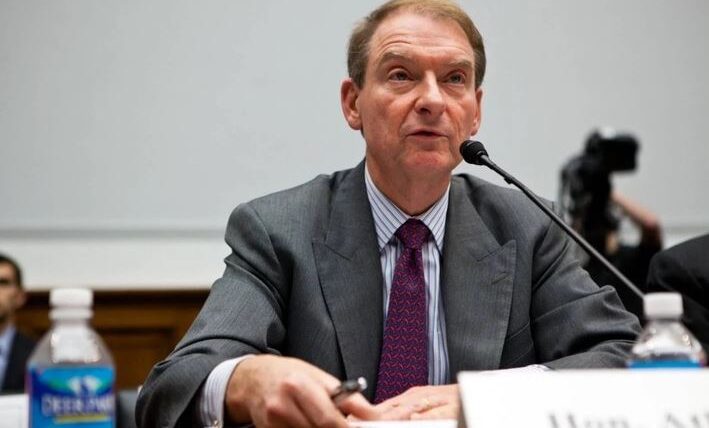
By Securities and Exchange Commission Chairman Paul Atkins has expressed optimism that the CLARITY Act will advance through Congress and ultimately reach President Donald Trump’s desk, as the crypto industry’s most important legislative effort approaches a crucial Senate vote this month. Speaking Tuesday, Atkins said he hopes Congress will pass the legislation, arguing that statutory market-structure rules are necessary to make the regulatory changes being pursued by the SEC durable across future administrations.
The Senate is scheduled to hold a cloture vote on September 15 on a motion to proceed with the CLARITY Act. That vote will be the legislation’s first major test after lawmakers postponed consideration before the August recess. It should not, however, be confused with final passage. Cloture would require support from three-fifths of senators — normally 60 votes — and would primarily allow the Senate to move forward with considering the legislation.
September 15 Becomes Critical Test
The CLARITY Act seeks to establish a statutory framework determining how digital assets are regulated in the United States, including the respective responsibilities of the SEC and Commodity Futures Trading Commission. The House passed its version in July 2025 by a 294-134 vote. Progress has since slowed in the Senate as lawmakers negotiate several politically sensitive provisions. Disagreements include restrictions on government officials profiting from crypto businesses, anti-money-laundering requirements and the treatment of rewards paid on stablecoin holdings. Community banks have also pushed for stronger protections against potential deposit outflows caused by interest or rewards offered through stablecoin platforms. Those disputes mean the September 15 vote remains uncertain.
Reuters reported in August that key Democrats needed to reach the 60-vote threshold had not committed their support, while analysts described passage before the November midterm elections as increasingly difficult. Even successful cloture would leave substantial work. The Senate could still debate and amend the legislation before holding another procedural vote and ultimately voting on passage. Any Senate version differing from the House-approved legislation would then require House approval before reaching Trump.
SEC Moves Ahead Without Waiting for Congress
Atkins’ optimism comes as the SEC simultaneously develops its own crypto framework rather than waiting for lawmakers. On August 18, the Commission proposed Regulation Crypto Assets, a tailored securities regime covering certain investment contracts involving digital assets. The proposal includes an exemption allowing qualifying issuers to raise up to $5 million during a four-year period and another allowing up to $75 million during a 12-month period, subject to disclosure and other requirements. It also proposes a conditional safe harbor under which qualifying crypto assets would no longer be treated as subject to an investment contract once specified conditions are satisfied.
Atkins has repeatedly emphasized, however, that SEC regulations cannot provide the same permanence as legislation. A future Commission could rewrite or reverse agency rules through the administrative process. Congressional legislation would instead establish statutory boundaries that regulators could not simply eliminate following a change in administration. Atkins said in August that legislation remains “indispensable” to establishing future-proofed rules and that the SEC would continue supporting efforts to deliver the CLARITY Act to Trump. The White House is applying similar pressure. Trump urged Congress on August 19 to pass what he called a “fair version” of the legislation during a meeting attended by executives from Coinbase, Robinhood, Kraken, Ripple and other major financial companies.
The September timetable is nevertheless tight. The Senate returns September 14 and has only a limited number of legislative days before its October recess and November elections. That makes the September 15 cloture vote considerably more consequential than an ordinary procedural step. A victory would demonstrate that supporters have assembled the bipartisan coalition needed to advance the legislation. Failure would not legally kill the CLARITY Act, but it would make passage during the current Congress significantly more difficult. Atkins’ comments therefore represent confidence in the direction of U.S. crypto policy rather than confirmation that enactment this month is assured. The SEC is already writing rules around digital assets. September will determine whether Congress is prepared to make that regulatory shift permanent.