
 By
By What Is The CFTC Preparing If Congress Does Not Act?
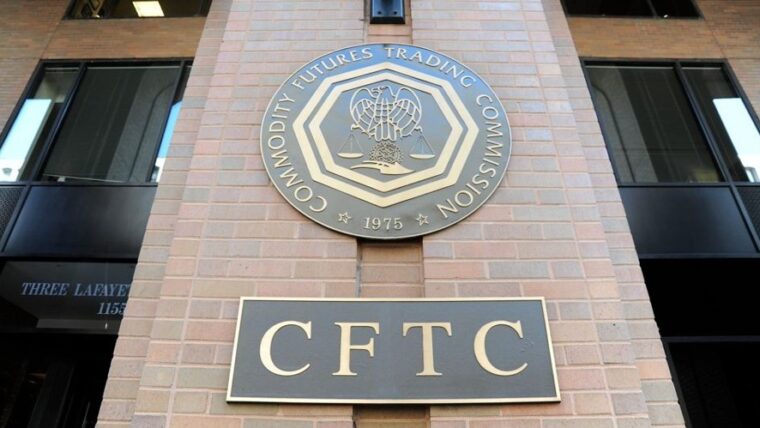
The Commodity Futures Trading Commission is preparing an alternative regulatory framework for crypto markets if Congress fails to pass the Digital Asset Market Clarity Act, potentially allowing the derivatives regulator to move ahead using its existing authority.
CFTC Chairman Mike Selig said Thursday that he has directed agency staff to explore rules creating a regulatory category for “crypto asset markets.” The framework could resemble the CFTC’s existing designated contract market structure, which governs regulated derivatives exchanges.
“To achieve this, I’ve directed the CFTC staff to begin exploring rules to codify a CFTC market structure for crypto assets using the agency’s existing authorities,” Selig told the inaugural meeting of the agency’s Innovation Advisory Committee.
The work would give the CFTC a fallback route if the Clarity Act remains stalled in the Senate. Staff have also been directed to examine rules that could give blockchain developers a legal framework for offering protocols in the United States.
Selig still argued that legislation would provide the stronger foundation. Agency rules can create operating standards within powers Congress has already granted the CFTC, but a statute could explicitly define jurisdiction over spot crypto markets and make the framework harder for a future administration to reverse.
Why Does The Clarity Act Still Matter?
The Clarity Act is intended to divide oversight of digital assets between the CFTC and the Securities and Exchange Commission while establishing rules for exchanges, intermediaries and token issuers. Its advancement now depends on the Senate, where supporters need enough bipartisan backing to reach the 60-vote threshold.
The bill faces a narrowing legislative window, with lawmakers still divided over several provisions. One unresolved issue involves an ethics proposal developed by Senators Ruben Gallego and Thom Tillis. Lawmakers from both parties have raised concerns about the current text, though opposition has been concentrated among Senate Democrats.
SEC Chair Paul Atkins also said this week that congressional passage remains the preferred route, even as his agency starts implementing its own crypto agenda. The SEC proposed Regulation Crypto Assets on Tuesday, a framework intended to reduce regulatory barriers for some crypto fundraising and startup activity.
The SEC and CFTC have also jointly described how different categories of digital assets could fit within their respective jurisdictions, but that policy approach does not carry the permanence of legislation.
Investor Takeaway
The failure of the Clarity Act would no longer mean that U.S. crypto rulemaking stops. The CFTC and SEC are building alternative frameworks, but agency-led rules could face greater legal challenges and future policy reversals than a market structure law passed by Congress.
Could The CFTC Regulate Crypto Markets On Its Own?
The central question is how far the CFTC can go under its current statutory authority. The agency already regulates derivatives markets and has enforcement powers covering fraud and manipulation in commodity spot markets, including digital assets treated as commodities.
A dedicated crypto market category could give exchanges and other operators a route into the CFTC framework without waiting for Congress. However, the agency does not have the same comprehensive statutory authority over spot commodity markets that it has over futures and other derivatives.
That distinction could become important if the CFTC attempts to build a full market structure regime through rulemaking. Crypto companies may welcome a federal route for registration, but the scope of the rules could eventually be tested in court or challenged by a future administration.
Industry executives at Thursday’s meeting argued that previous enforcement policies pushed crypto businesses and hiring outside the United States. Ripple CEO Brad Garlinghouse said his company had been forced to expand abroad during its long-running regulatory dispute and argued that clearer rules would make it easier for financial technology companies to grow domestically.
What Else Is The CFTC Planning For Crypto And Prediction Markets?
The agency’s work extends beyond spot crypto trading. Thursday’s committee meeting also examined artificial intelligence and prediction markets, another area where the CFTC is increasingly involved in disputes over regulatory authority.
Selig has backed the agency’s claim of exclusive federal jurisdiction over federally regulated prediction markets as several states challenge sports-related event contracts under gambling laws. The CFTC has become involved in multiple court disputes and has already started developing rules for the sector.
Selig said further proposals are planned to modernize corporate and listing requirements for designated contract markets offering event contracts and to add consumer protection requirements.
The expanding rulemaking agenda means crypto companies may receive new federal requirements even if the Senate cannot finish the Clarity Act. The difference is that an agency-built framework would rest on interpretations of existing law rather than the comprehensive authority Congress could provide.
For exchanges, developers and institutional investors, the Senate outcome therefore determines more than the timing of new rules. It will decide whether the next U.S. crypto market structure is built primarily by Congress or assembled piece by piece by the CFTC and SEC.