
 By
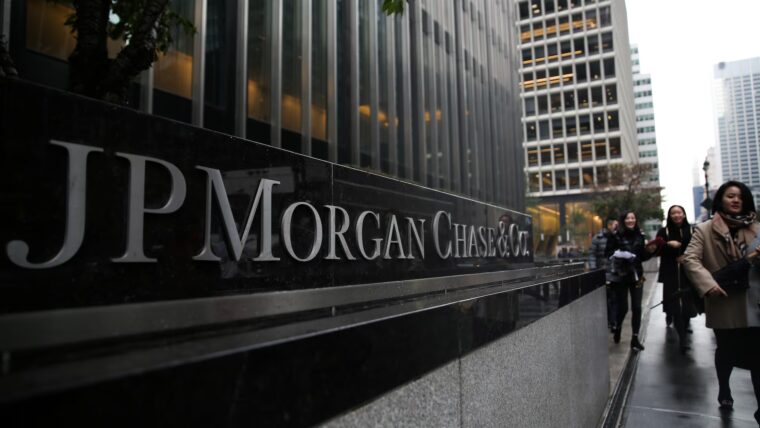
By JPMorgan analysts said Hyperliquid faces “significant challenges” to its market share as regulated perpetual futures and prediction markets compete for the same traders, according to a report published by The Block on August 6. The warning arrived after HYPE exchange-traded funds lost the inflow momentum that accompanied their May and June launches, but the bank’s conclusion sits against a protocol still processing close to $190 billion a month.
What The JPMorgan Note Actually Claims
The note from analysts led by Nikolaos Panigirtzoglou makes two connected arguments. Regulated US venues can draw perpetual futures liquidity away from decentralised platforms, while Hyperliquid’s expansion into outcome contracts puts it against established prediction markets. The analysts also cited licensing, know-your-customer controls, manipulation, attacks, oracle failures and consumer safeguards as risks facing decentralised derivatives venues.
“The launch of U.S.-regulated crypto perpetual futures products could accelerate a shift in liquidity away from offshore and decentralized venues to onshore venues,” the analysts wrote. That pressure is no longer theoretical: Coinbase and Kalshi introduced CFTC-regulated perpetuals in May, while Kraken followed in June. Europe is also examining whether crypto perpetuals fall within existing CFD rules.
Hyperliquid Still Controls Billions In Trading Activity
DefiLlama data pulled on August 10 shows Hyperliquid generated $1.735 billion in 24-hour perpetual volume, about 23% of the $7.528 billion market tracked by the service. Its 30-day volume was $187.28 billion, almost 40% of the $470.72 billion total, while open interest stood at $10.67 billion. The difference between the daily and monthly shares supports JPMorgan’s direction of travel, but one day is not enough to establish a lasting loss of liquidity.
Aster recorded $661 million in normalised daily volume, followed by ApeX at $602 million and Lighter at $505 million. Those venues are dividing the on-chain market rather than producing one replacement for Hyperliquid. The protocol also has a second defence through HIP-3 markets for equities, commodities and indices, which broaden fee generation beyond crypto pairs.
The HYPE ETF Stall Is Smaller Than The Headline Suggests
The ETF figures require a correction. HYPE funds do not individually sit in a $2 billion to $3 billion asset tier with Solana and XRP products. JPMorgan’s comparison grouped those non-Bitcoin and non-Ether categories together, while SoSoValue showed $257.35 million in HYPE ETF assets on August 10. Bitwise separately reported $96.25 million for its fund on August 6, and Grayscale reported about $127 million at the end of June.
The slowdown is nevertheless visible. HYPE funds lost $30.6 million across three weeks before adding $2.84 million in the week ending August 7, bringing cumulative net inflows to about $280.8 million. That modest return means flows have resumed, but remain far below the pace that helped drive HYPE to record prices in June. Earlier ETF demand had reinforced the token’s price rise; redemptions now test how much demand comes from the protocol itself.
Competition Now Comes From Three Directions
Hyperliquid faces other decentralised exchanges, regulated US derivatives venues and prediction-market operators. Its Outcomes product places it against Kalshi and Polymarket, while Aster has also entered event contracts. Hyperliquid is opening the framework further through permissionless HIP-4 deployment, although the required 500,000 HYPE stake limits the likely builders to well-capitalised teams.
The counterargument is that Hyperliquid is becoming infrastructure rather than remaining a single exchange. Founder Jeff Yan has described the ambition as becoming the “AWS of finance”, with outside builders creating markets on HyperCore. That strategy can widen the moat if new markets add volume, but it also gives traders more reasons to judge Hyperliquid on execution, liquidity and fees rather than loyalty to one interface.
What Would Prove JPMorgan Wrong
The rebuttal must appear in operating data. Hyperliquid would need to keep its 30-day perp share near 40%, maintain open interest around $10 billion and convert HIP-3 and outcome markets into recurring fees while Coinbase, Kalshi, Kraken, Aster, ApeX and Lighter expand. A renewed ETF run exceeding the recent $30.6 million redemption cycle would provide a separate signal that regulated investors still expect the protocol to hold its position.
For now, JPMorgan has identified pressure rather than demonstrated defeat. Hyperliquid’s 23% daily share shows that the market is becoming less concentrated, while its 40% monthly share and $187 billion of volume show that the moat has not disappeared. The next evidence will come from whether those figures converge downward, and whether HYPE fund inflows recover beyond one modest week.